What is Experience Design?
Experience Design is a design methodology in which the final product is the experience of the user or the audience rather than the thing that is created.
Because everything* that a human engages with creates an experience, experience design is discipline agnostic, and experience designers tend to work across disciplines.
After all, a website is only fully revealed through your contribution of time, attention, decisions and actions. To earn these, the success of a site depends on more than just looks. It must also be written and organized with intent. Whether the intent is to inform, overwhelm, or trigger another emotion entirely, the underlying structure and pacing are vital aspects of the experience. These considerations are part of a design just as much as the colors, images, and typefaces used.
This site was designed and developed by Erica Holeman on the Squarespace platform.The sans-serif typeface used is Scandia by Process Type Foundry. This typeface is Ballinger Mono by Signal Foundry.ten principles of experience design:
All We Have are Experiences
When we make the experience the aim of the design process, we are no longer making things, but putting those things in service of our larger experiential aim.
Employ Empathy Rigorously
Experiences exist only in the lives of the experiencers. We must learn to see with their eyes, and use research and inclusion to help us see what we cannot.
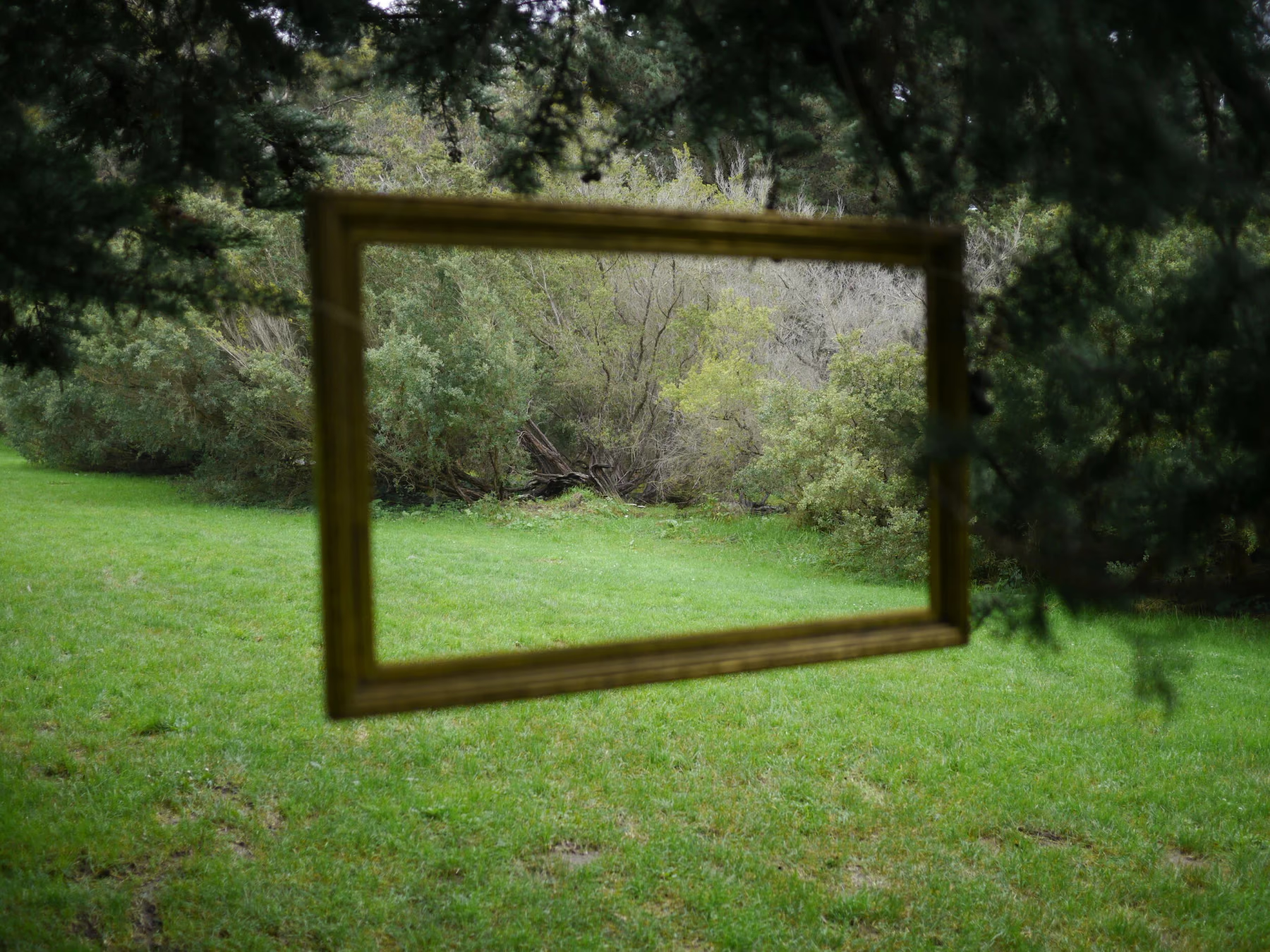
Experiences Are Framed
Experiences are framed by agreed upon or assumed limits inside which is the design, outside of which is the rest of life; these are temporal, spatial, and conceptual.
Powerful Experiences Engage the Whole Person
Experiences are received through all the senses and may be intellectually, emotionally, and physically immersive.
We Live in Many Worlds
Worlds are grand collective experience designs. Whether at the scale of a country or at the scale of a board game, the general design principles are the same. Worlds determine who we can be and what we can do.
Narrative is Everywhere
Because the experience of narrative can be found not only in texts, but in things, in interactions, or in environments, the experience designer writes stories in many different forms.
Design for the Unknown
The defining quality of liveness is the unknown. Therefore, for an experience to feel truly alive, it must include the unknown.
Transformative Experiences Work with Eventness
When a well-structured experience meets an engaged group of people, eventness emerges, and change is possible.
Use Diagrams
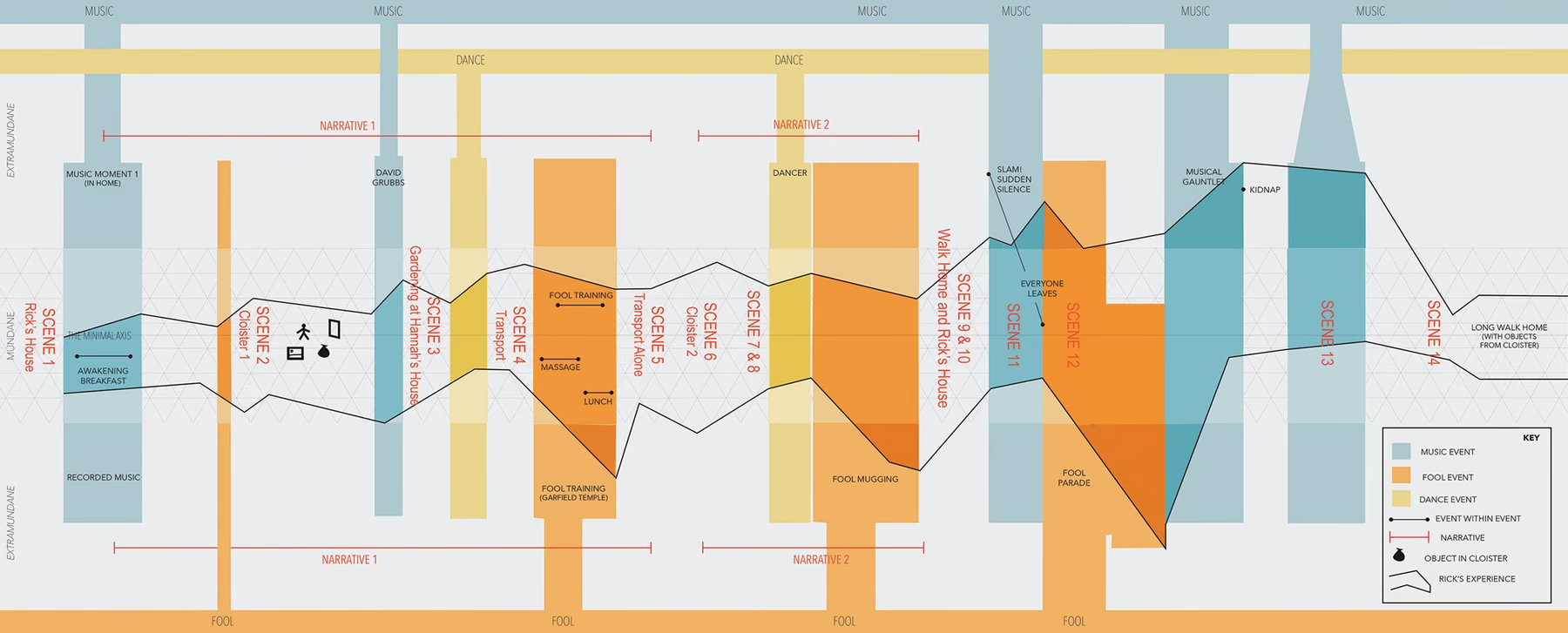
Diagrams are the tools the designer uses to become the experience designer, liberating the design process from the strictures of old notational forms.
Make Work that Matters
Because we have a finite number of experiences on this side of oblivion, your work had better be meaningful.
