Time Is an Experience Design
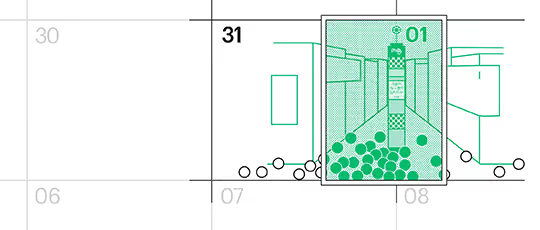
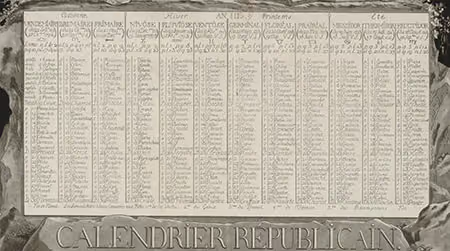
We have now flipped the page to a new month and a new year, a new sense of possibility, a new way of structuring memory and of creating community. I can think of no design more powerful than the lowly calendar. The calendar reinforces our sense of circularity, of knowing what to expect; it generates a structure to our lives. Can you imagine a world without it? It tells us how long since the time that matters began (with Jesus’s life, 2024 years ago, or at the beginning of everything in the Hebrew calendar, 5784 years ago, or in (our) 1787, if you’re a French Revolutionary). Such a simple convention, and so powerful, quietly reminding us of the origin story of the world. And who can argue with a calendar?
One way of understanding most traditional religions is as calendar-based experience designs. They structure time around a rhythm of internal, spiritual, and communal activities. Now is the time for anticipation, now the time for morning, now the time for repentance. A few years ago, Ayden and I worked with a group of young people at the Austin Presbyterian Theological Seminary to help them rethink the design of Advent (and its primary artifact, the Advent Calendar). Advent is a countdown to Christmas, building anticipation and offering a time of preparation for the celebration and the year to come. As eventness goes, it can be brilliant, building a personal narrative and an ontological connection to the holiday long before it begins, such that the event itself is the focal point of a long season, rather than just a day off work.
Of course, a calendar can’t do the work all by itself. It has to tie into a larger worldbuilding project. It links to historical narratives, to language, to a community’s understanding of the laws of (meta)physics. The French Revolution calendar that started at 1787 never really caught on, and that’s the problem with worldbuilding through a single aspirational artifact: you end up looking at it through the lens of an idea, a hope of rearranging the way we see time. But when it comes to worldbuilding, each artifact is part of a larger system, reinforcing and revising a narrative of historical time, of the future, of the movement of meaning through the year. Great worldbuilding finds such narratives reinforced in books, in rituals, even in the ways we lay out our cities.
But thinking about calendars is a great proxy for thinking about worldbuilding interventions we might make in our real lives…
Consider the Mayan Calendar, which (didn’t exactly) end at the year 2012. What would it have been like to have actually believed time was ending? How might you live your life differently?
Or what if your calendar were in the stars, in the dark spaces of the Milky Way? What would it do to you to have to wait until nighttime to see what day it was, to always consider the movement of the stars in order to understand your own life? How could you not become interested in astrology?
Or what if your calendar were a memory palace, built into the living world around you, such that the growth of a tree would match the growth of your family, the changing coloration on the siding of your home would mark the seasons, the months would be marked by well-timed plantings of flowers and fruits. How would this change your relationship to the environment?
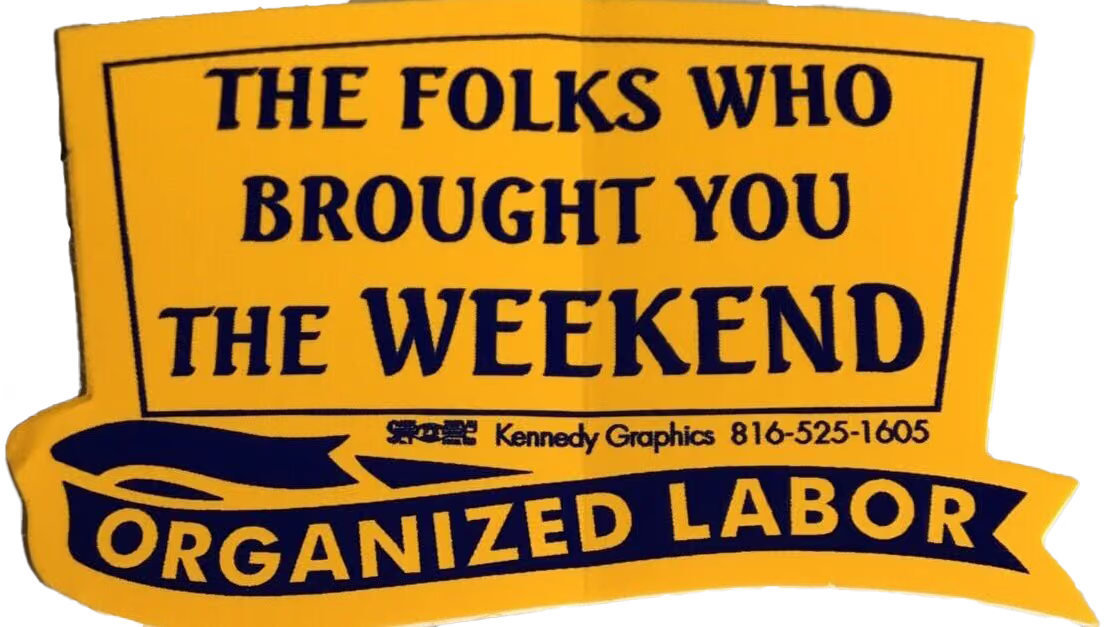
My favorite labor movement slogan is “the folks who brought you the weekend.” Cute. Seems a little tonally off (Can’t imagine Jimmy Hoffa saying it). But after a beat it becomes clear how brilliant it is. It’s not that we negotiated days off, but that we changed the calendar for everyone. We changed time itself. Who else can make such a claim?
Brian Sholis at Frontier Magazine read my book and then realized that he had done a terrible job on his wife’s birthday gift. Oh well! There’s always next year, and you gotta start where you are, Brian. Check out the review.
On the Bookshelf
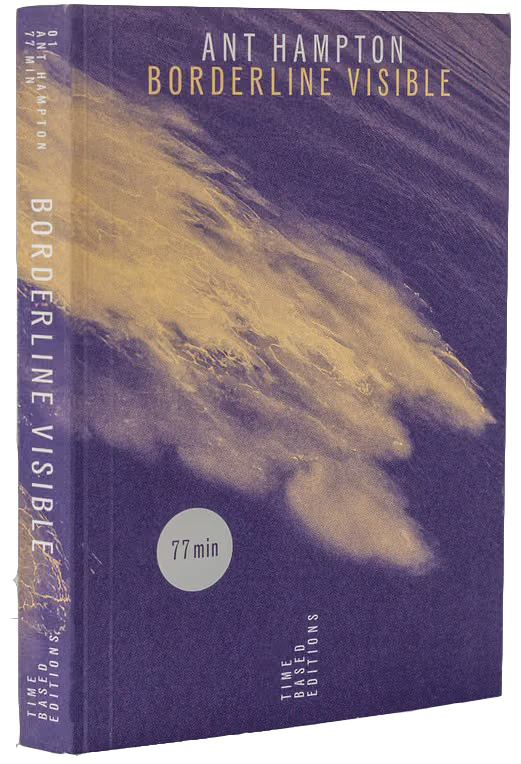
I just finally got my copy of Ant Hampton’s Borderline Visible, which is a book paired with an audio track. As you listen to the audio track you flip through the book, looking at maps and images, reading along with what you’re hearing, having a conversation with the book. It is aligned with Hampton’s work, which all seems to be audio track plus physical engagement (though never a walking tour, I think), and it pushes the form forward in interesting ways. I love books. I love the experience design of books. This book brings that experience design to front of mind. It’s gorgeous, and built around The Waste Land, by TS Eliot, one of my favorite poems.
This isn’t a book, but I just finished the week-long experience created by Fereshteh Toosi, The School of Oil and Water. It was started in the Odyssey Works Incubator but it has been developing in fascinating ways for years. This is a box that arrives in the mail with daily participatory explorations of your personal relationship with oil (each by a different artist). There is a mix tape for breaking up with oil, a game where you experience how drift works in the ocean (using waste plastic as pieces). This is a petroleum themed divination kit with dice and crazy glyphs and an interpretation guide.
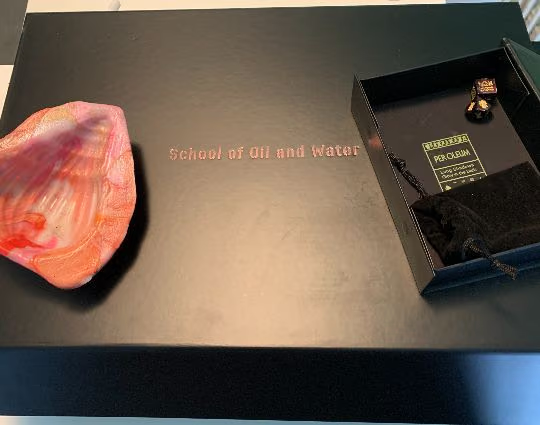
I really enjoyed this project, and it made me think about how we engage with ideas and with learning. What if online learning worked this way? What if grandparents told their grandkids their family histories this way? What if this was the new form for a newspaper?
Together these projects have got me thinking how traditional forms have so much innovative potential built in. What else do we know so well that a little divergent experience design thinking might do wonders for?
