Scale

DUNE was one of those movies that has flummoxed filmmakers forever. David Lynch’s 1984 version was widely panned by critics, and Alejandro Jodorowsky’s attempt—featuring Salvador Dali and Pink Floyd, among others—spectacularly crashed and burned. The curse seems, now, to be broken; Denis Villeneuve’s take is brilliant and engrossing. If you’ve read and loved the book, you may feel as I do, that the film gets it in a way that the Lynch version did not.
But why is that?
I would venture that Villeneuve, with his endless vistas and his hazy, fugitive horizon lines is a master of scale. The Desert in this film feels vast. The worms feel enormous. The task thereby feels huge and the consequence undeniable. The film trims much of the plot of the book, choosing to focus on the worldbuilding and the character transformation. all made tangible by the continuous experience of scale.
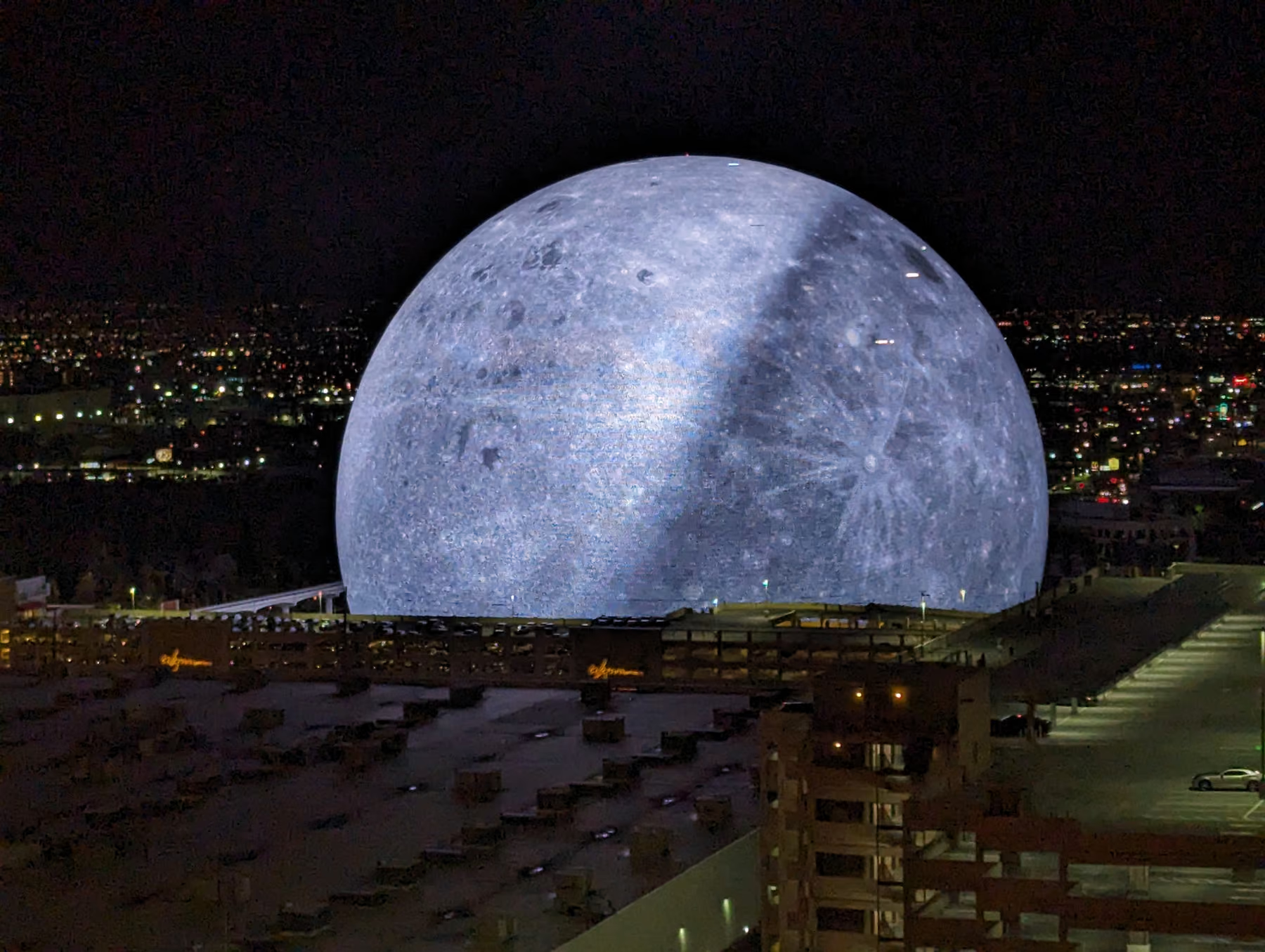
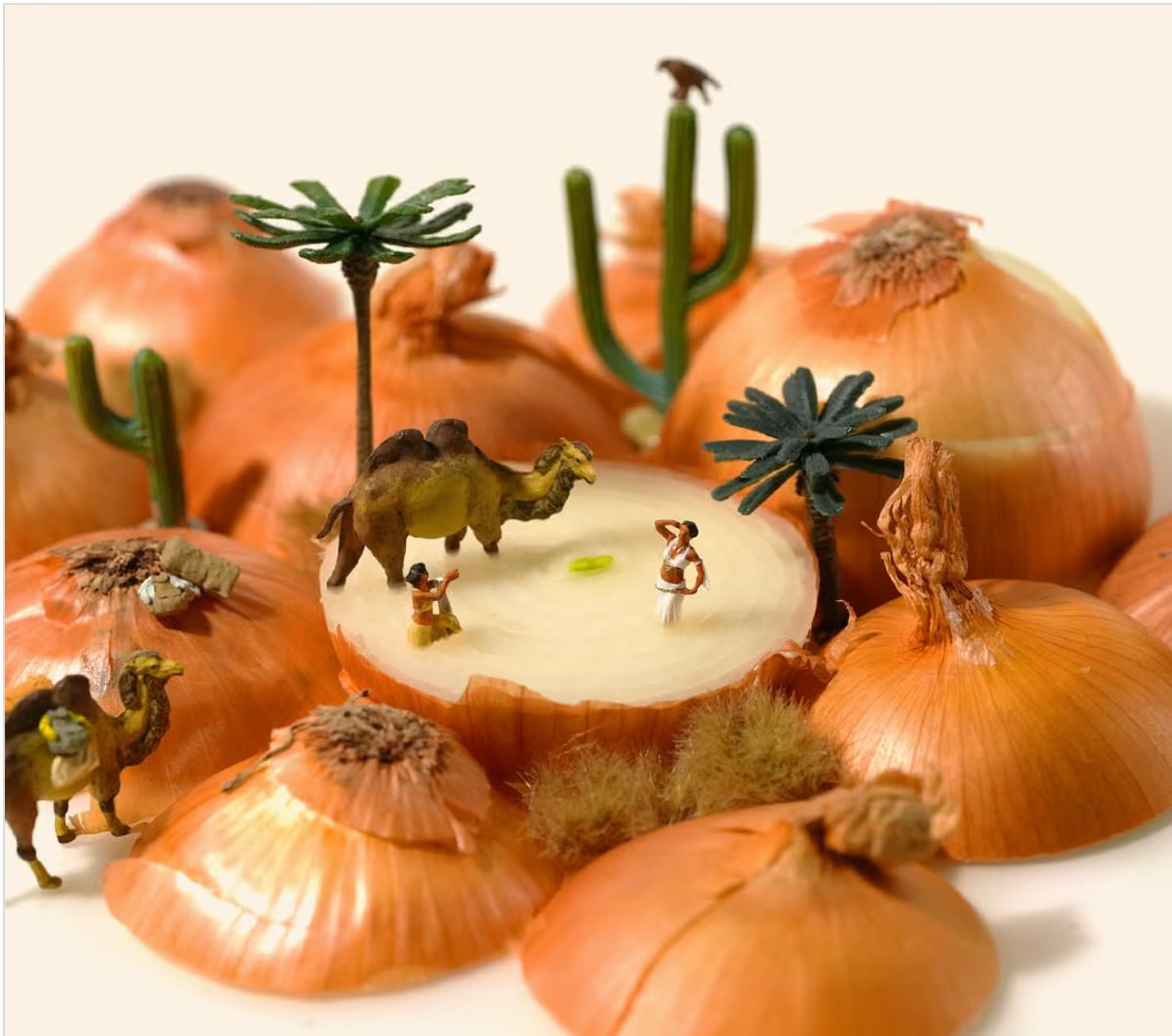
If you are interested in designing things or experiences that stand apart, that break the sense of the ordinary, frequently the place to start tinkering is scale. Think of the much discussed Sphere, in Las Vegas. It may have innovative technology and amazing designers working on it, but the reason we are interested is the scale of the work. So it is with the images of Tanaka Tatsuya, whose miniature worlds feel magical as they transform wallets in to grand pianos and onions into desert dunes.
I was recently introduced by a student (thanks, Sparks!) to a video game called Everything. There isn’t a lot of gamification to it, mostly just the experience of scale. You zoom in from the scale of an animal down to the scale of a microorganism, then out and out and out to the scale of the galaxy. It’s humbling. It puts you in your place, as they say. And it’s reminiscent of Powers of Ten, the classic short film by Ray and Charles Eames.
We can talk about different scales until the sun turns blue, but experiences of scale have a quick and undeniable effect on the body. Looking up at the stars we feel our relative insignificance. At a sports stadium we feel ourselves contained in a vast sea of humanity. Scale is about bigger and smaller, but it is also about more and less, and longer and shorter. Presenting things at a new scale, or suddenly shifting scales can make us understand ourselves and our contexts in a totally new way.
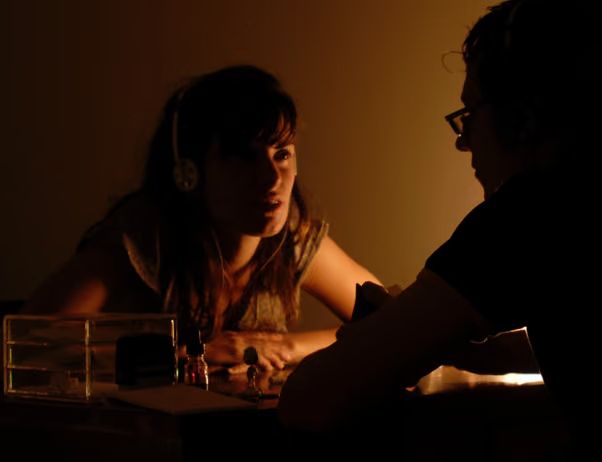
One of my favorite experience designs that works with scale is Etiquette, by Rotozazza.
It was a piece of “Autoteatro” that took place in a bar. Two people, using props and directed by headphones, performatively told each other a story, managing props and their own eyes in a filmic way, zooming in to a small detail or zooming out to take in the face of their companion. Each scale shift was a moment of wonder.
Bringing it back to Dune, I had a lot of fun looking for the typeface used in the Dune movie. Spoiler, it doesn’t really exist, but a “fan font” exists, based on the Canadian Aboriginal Syllabics. To me, the curves and simplicity of the font speak the the particular scale of the film.
Poll Results!
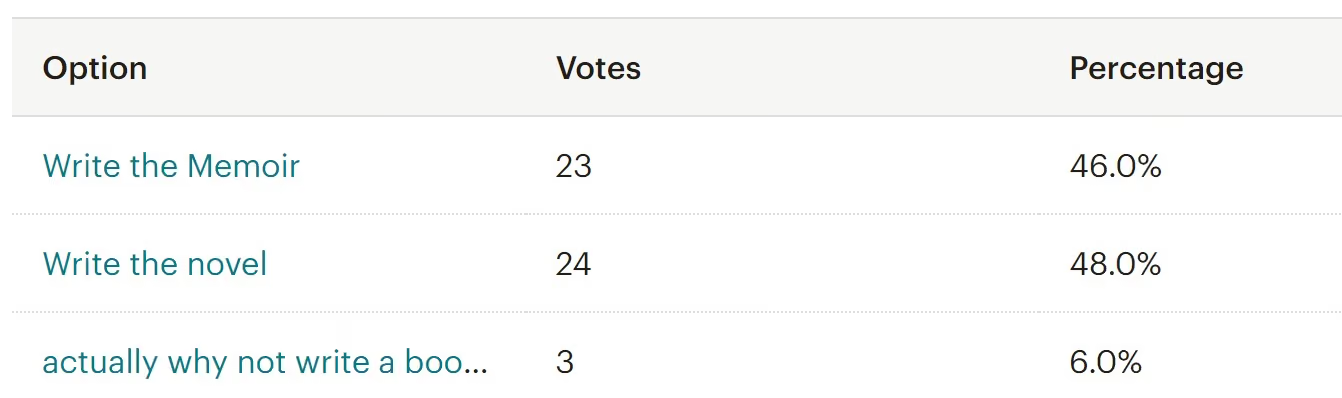
Well, you all were no help. I asked in the last Phase Zero if I should write a novel or a memoir, both about experience design and worldbuilding. The results were essentially a tie. Three of you thought I should write some sonnets, though I think those days may be behind me.
On the Bookshelf (challenging reads edition)
When I was a lowly undergrad, trying to figure out if there was a way to talk about experience without getting lost in the woo woo weeds, I came across phenomenology. Mind. Blown. Everything else in academia was about things, about right definitions, about punching holes in arguments. Phenomenology said what really mattered was the subjective experience of the individual in the world. I was writing a thesis about transformative experiences in Sufi architecture, and most western writing was about the building, the symbolism, the cultural context. Phenomenology said let’s start from the experience of transformation and see how the building connects to it. Fantastic. Experience Design Thinking before there was the term Experience Design.
Design for Dasein by Thomas Wendt is a curious, poorly designed, self-published academic essay by a designer who works at Amtrak and is not part of academia. There are even some typos, and the writing is fairly dry. I was not inclined to trust it.
But it is actually quite well researched and it is the first time I’ve seen a decent analysis of experience design seen through the lens of phenomenology. Wendt focuses on Heidegger’s idea that we are not independent bodies interacting with a world apart from us but that we exist with our things, that they are part of who we are and how we engage the world. This has a lot of implications both for what is designed and how those things are designed. This is experience design deeply rooted in UX and not the broader ways we have been exploring here, but it’s not hard to extrapolate the ideas.
Don’t have the time for the book? Watch the movie.
As long as we’re on the difficult readings section of the bookshelf, we should stop at The Corn Wolf, by Michael Taussig. I spend half a class every year with my design writing grad students doing a close reading of the title essay. Because there is nothing else like it. An anthropology professor, Taussig’s field is one that has a long tradition of sending white people to foreign cultures and using writing to explain away their magic. He calls this agribusiness writing, and it is the same thing that a supermarket does to food and a totalitarian government does to the self. Writing, he says, is a magic act. It infects the reader with new realities and has supernatural powers to change reality. Every time we put two words together we are messing with the nature of the universe. We can call new worlds into being and end wars. It can free the mind. When I read The Corn Wolf (as I have many times) I am reminded of the boxer Hurricane Carter, in jail for a murder he didn’t commit, declaring, after reading a book that changed him irrevocably, that he had thought he was in one prison but discovered that he had been in two. The written word had broken him out.*
*this story is possibly apocryphal; I heard if from someone who heard it from someone…But it is definitely, as David Fleming would say, narratively true.
