What Actually Happened in Tiu's Odyssey?
Report from an Odyssey Pt. 2
I’m back for a second email (who knows how many parts there will be! As many as feel right) about our recent Odyssey for Tiu de Haan in Vesoul, France. I’m hoping that I can reveal something both about our process as artists making work for one person and pedagogically about teaching collaboration and empathetically-driven modes of working.
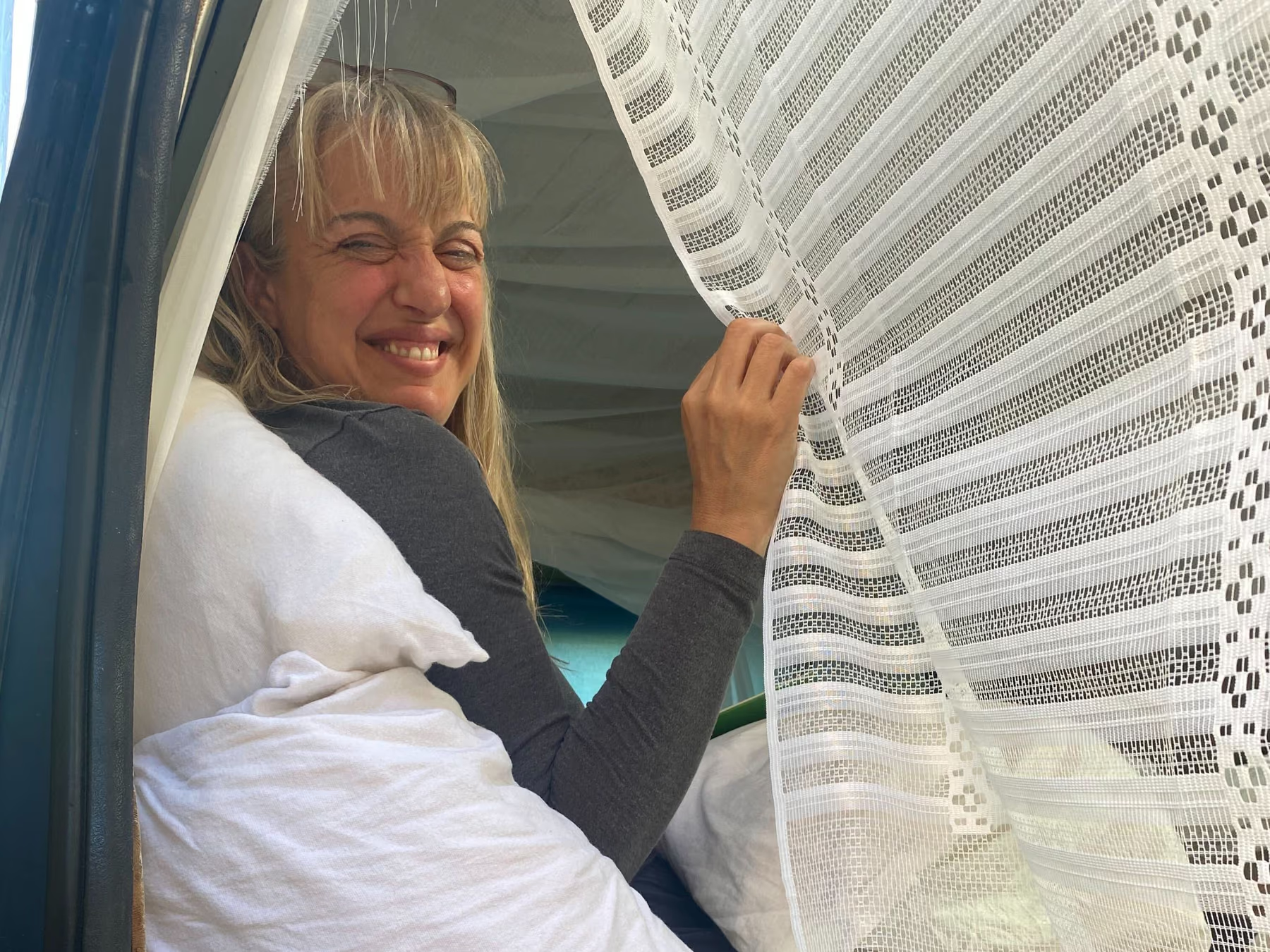
Tiu de Haan is utterly unsummarizable. All of our participants are (truly!) but I say this about Tiu because she filled out our questionnaire and it was a record-breaking fifty pages single spaced. I mean—it was basically a quarter the length of a standard novel. She has lived many lives—one as a singer song-writer, one running Eyeshine (a not-for-profit that helped parents learn to play with their kids), and now, as a ritual designer and self-proclaimed idea doula who coaches people how to tap into their creativity.
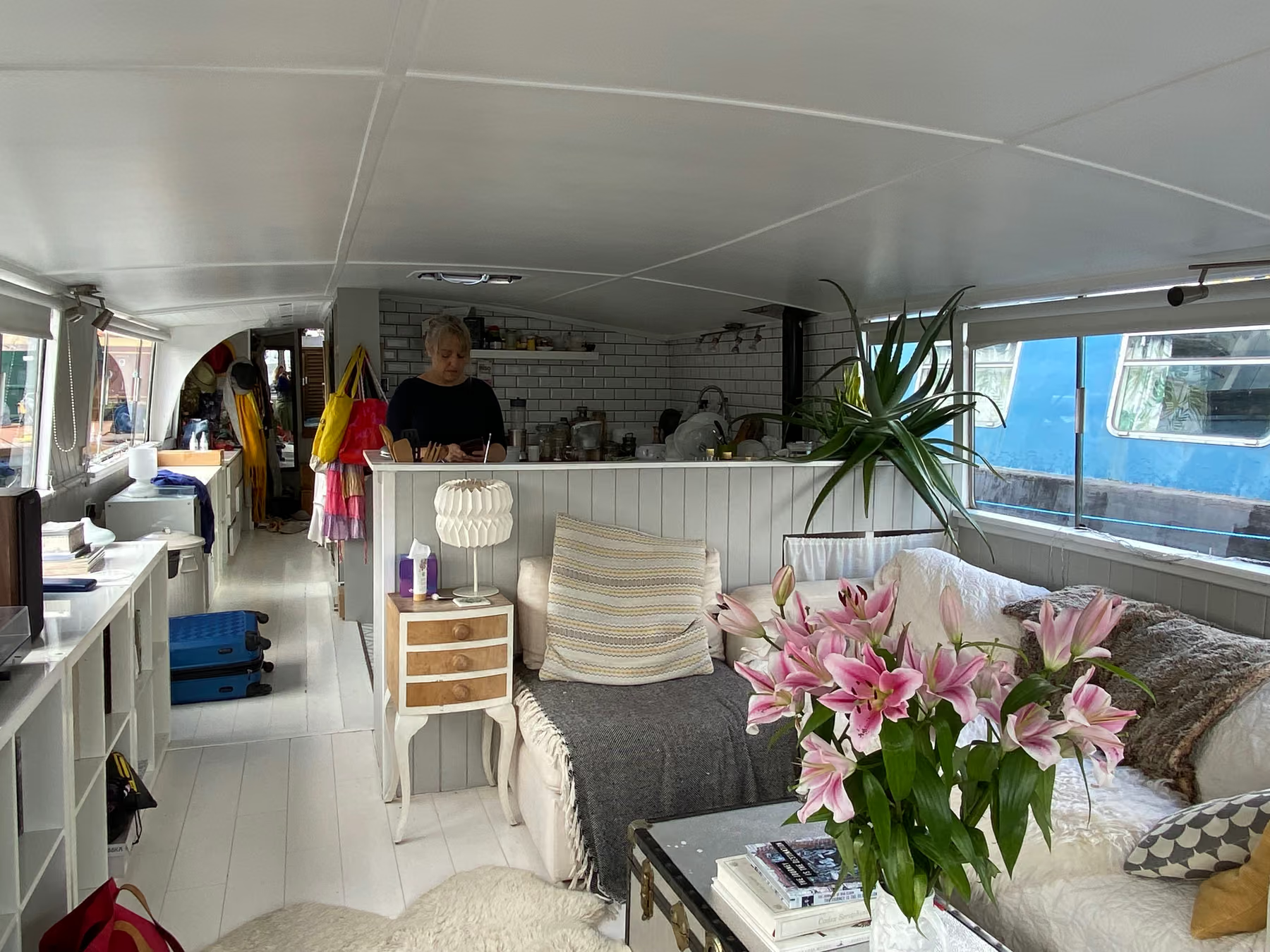
In my last newsletter I mentioned that she was on the cusp of turning 50—the age when her mother died in front of her from cardiac arrest. Tiu is a London gal—she has lived on a boat moored not far from downtown London since 2016 or so. For a few years, Tiu has been dreaming of establishing a residency for experiential works and on the hunt for collaborators to manifest this place. This vision she’s had is of a place in a pine forest—decidedly not the metal boat floating in the midst of a metropolis.
Sophie Larsmon and I interviewed Tiu many times leading up to her Odyssey. Often, she referenced a lobster’s molting processes, marveling at the way they become exposed and vulnerable when they outgrow their hard shells. This detail about the lobster became a key element in how we began to think about designing an experience for Tiu–our role as we saw it, was to help crack off the old shell so she could expand into the next phase of her life and make it home.
When we talk about Odysseys we often reference the concept of “pronoia”—the sense that the world is conspiring to make good things happen for you (the opposite of paranoia). Tiu is the most “pronoid” person I have ever met. She walks around and sees the magic everywhere. She delights and finds meaning and signs left, right, up, down, sideways, backwards, and in every nook and cranny. She listens to the universe and it guides her….
I am not this way. I love the world and delight in its beauty, yes, but I don’t feel there are signs scattered everywhere for me. I’m simplifying here because this is a newsletter, but for much of my life I’ve been quite pragmatic and analytical. One of the ways this Odyssey changed me profoundly was to widen the channel of my own intuition and the role it played in guiding me. I’ve been working on that for a couple years already, but the process of trying to understand how Tiu takes on the world invited me into a deeper way of listening to voices that weren’t reason-oriented and allowed me to have more room for not knowing all the answers….
So how does pronoia play a role in what we made for Tiu? One of the instincts that emerged from our Master Class Fellows* was to begin with disappointment, to offer the opposite of pronoia.
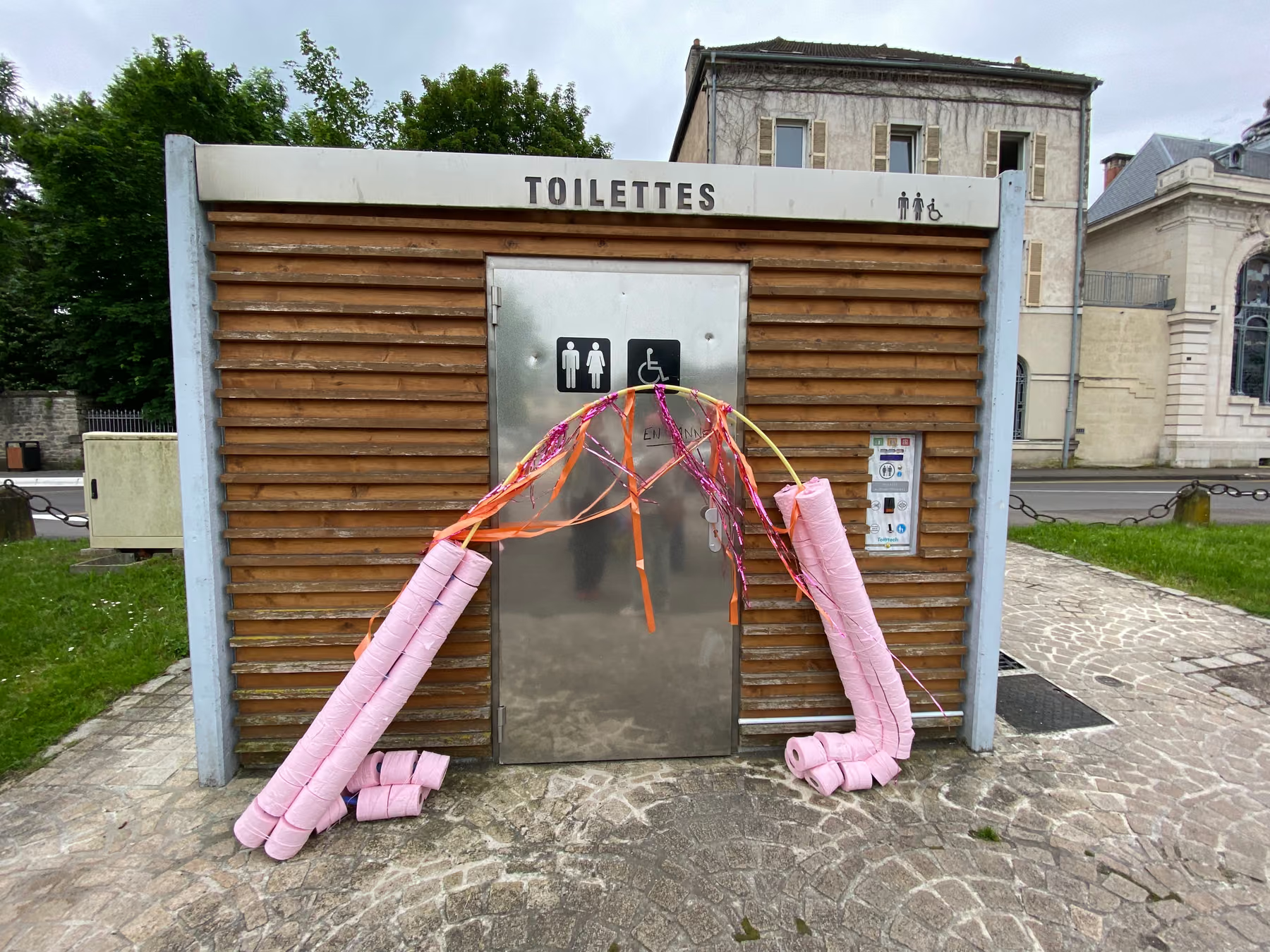
Photo by Maggi Asbjørnsen
It was a risk to begin that way—to burst the magic and offer a counterpoint to what Tiu might be expecting from Odyssey Works. In the end this was incredibly funny and silly: we enacted a failed Odyssey. A sculpture of toilet paper that spelled TIU (and, as fate would have it, fell over right before Tiu saw it). A shitty picnic (or the “shit-nic” as we referred to it), with squished strawberries and pre-packaged croissants. Me taking her to the grocery store in a panic because a student was ill. And because Tiu is Tiu (someone who also has quite the sense of humor), she laughed, took our failures in stride, and thought it was positively hilarious.
This was the opposite approach we take to many Odysseys. Often they begin with comfort, with a sense of leaning into what makes an individual feel most themself so that they can then launch into more challenging elements of what we’ve designed. So after all the chaos, we treated Tiu like a Queen: brought her to a place with a stunning view where she was tended to by some gentlemanly folk, then a decadent do-over of the failed breakfast in a camper van that had been built out into the most charming waffle kitchen you’ve ever seen (Tiu loves a big birthday breakfast). There she was invited to tend to the vision of her residency and clarify her role, with someone else on the team, Alex, who runs a residency in Italy.
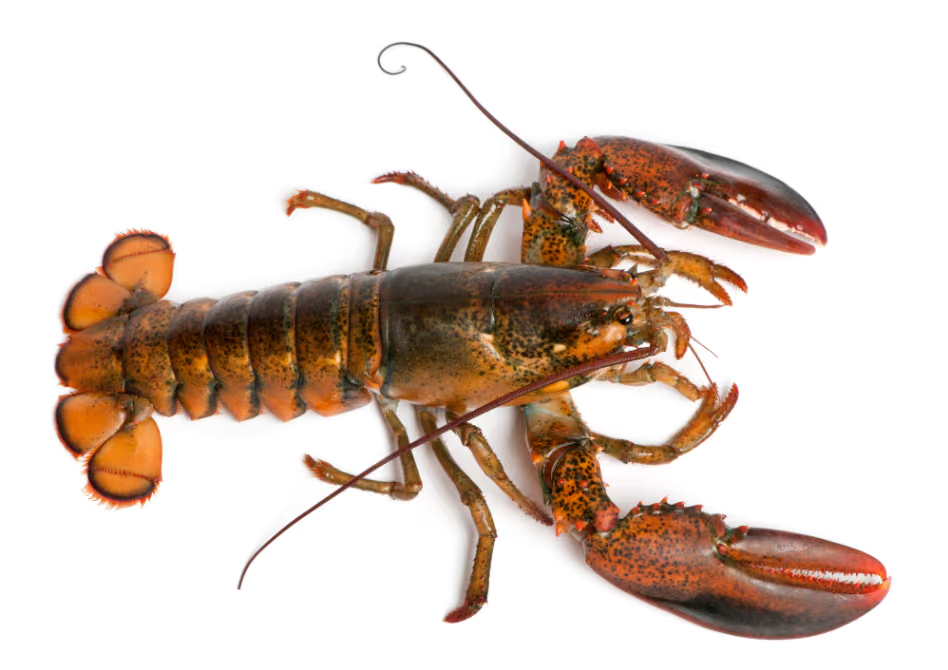
This was the beginning of softening the lobster shell, with humor, levity, but there were undoubtedly more vulnerable moments, moments where she was challenged that were integral to cracking it off. Stay tuned for another installment about that soon, and in the mean time, I wonder: What was the last lobster shell you outgrew in your own life? And how did you prepare to molt?
*Even though someone surely was the first to suggest this, as Zach Morris of Third Rail said to our EDCP cohort this spring, we see collaboration as one long stream of giving gifts to those we are working with so we prefer to credit everyone and the momentum that happens when we build on each other. The Fellows this year were Maggi Asbjørnsen, Mira Azram, Sarah Brown, Christopher Daniel, Abbygäelle Devriese, Lina Edris, James Lopez, Anna Nalpantidis, Brian Rush, Amy Segreti, Casey Selden, Alexander Todaro, and Kristen Witte.
