Sweat / Soak
There are not that many experiences in life that you know will almost always be good.
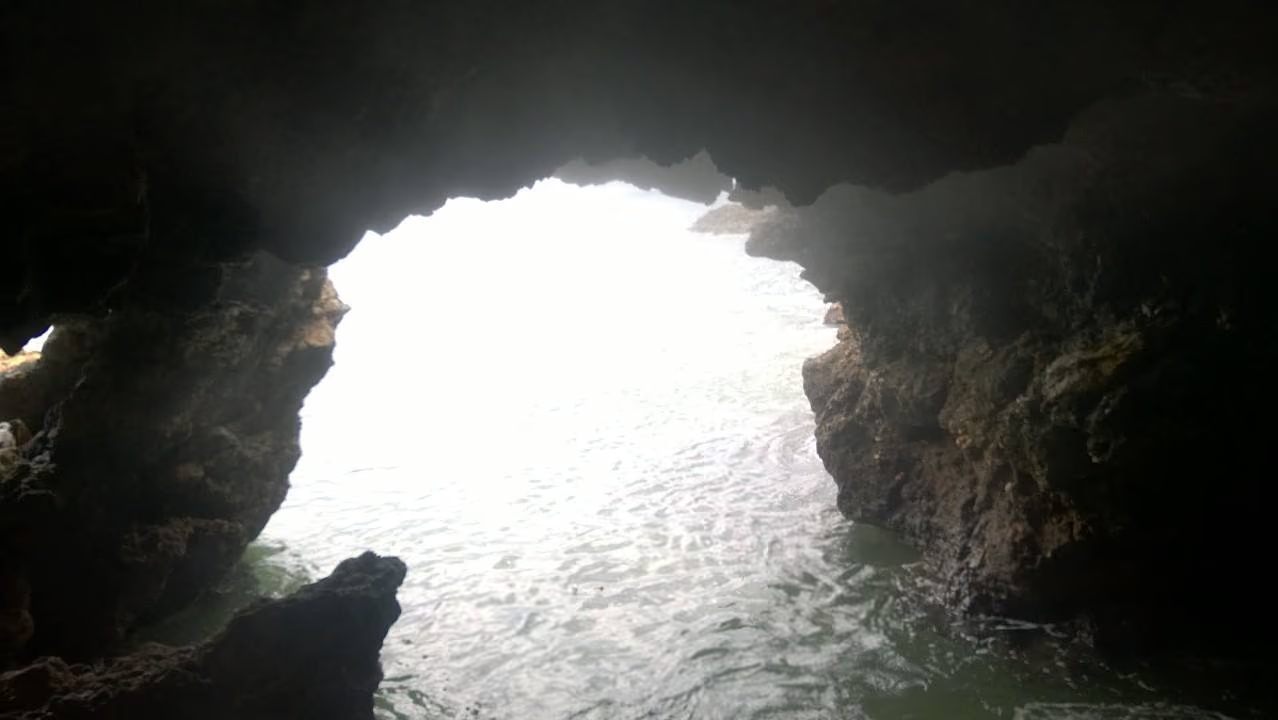
If you find one, hold on tight, go back as often as you can, dig deep to learn more. For me (other than Dare Turner’s Paleo Chicken Pot Pie) it has been sweat experiences: saunas, steams, hammams, hot springs, hot tubs. I love the intensity and the architecture and the care and the community and the way I feel after. How could you not? I’ve traveled the world looking for such experiences, beginning with a day at an Istanbul hammam at the end of Ramadan, 1995, and continuing to hot springs in California, a Mohawk sweat lodge in upstate New York, the curious Russian Turkish Baths in New York, Icelandic hotpots, Korean Spas, German neighborhood sauna/beerhouses, the tiny hot water filled hole in the ground that George Washington used to bathe in. My wife and I even spent two weeks on a Greek Island searching for a natural cave sauna fed by a volcanic vent. We nearly died breathing vapors in the wrong cave and had to swim in to the actual cave from the Mediterranean, but it was worth it.
Like religion, soak/sweat traditions are some of the greatest sources of experience design wisdom. They involve the body in the most sensorially specific ways. They involve purpose-built immersive spaces. They are emergent from and representative of places and peoples. They are often ritually structured, sometimes in religious or spiritual contexts, and they are built into the calendars of people and cultures to offer both transformation and maintenance.
Everything matters in a well-designed sweat experience. Every smell, every piece of clothing, every cultural norm. Who is in the room matters. The time of day matters. The cleanliness matters. Is there anything so sad as walking into the gym sauna and finding someone inside, phone in hand, sneakers on, flipping through Instagram? From a thingy perspective, the sauna is just the room and the heat source. From an experience design perspective, the room and the heat source are merely the catalyst for a much grander possibility.
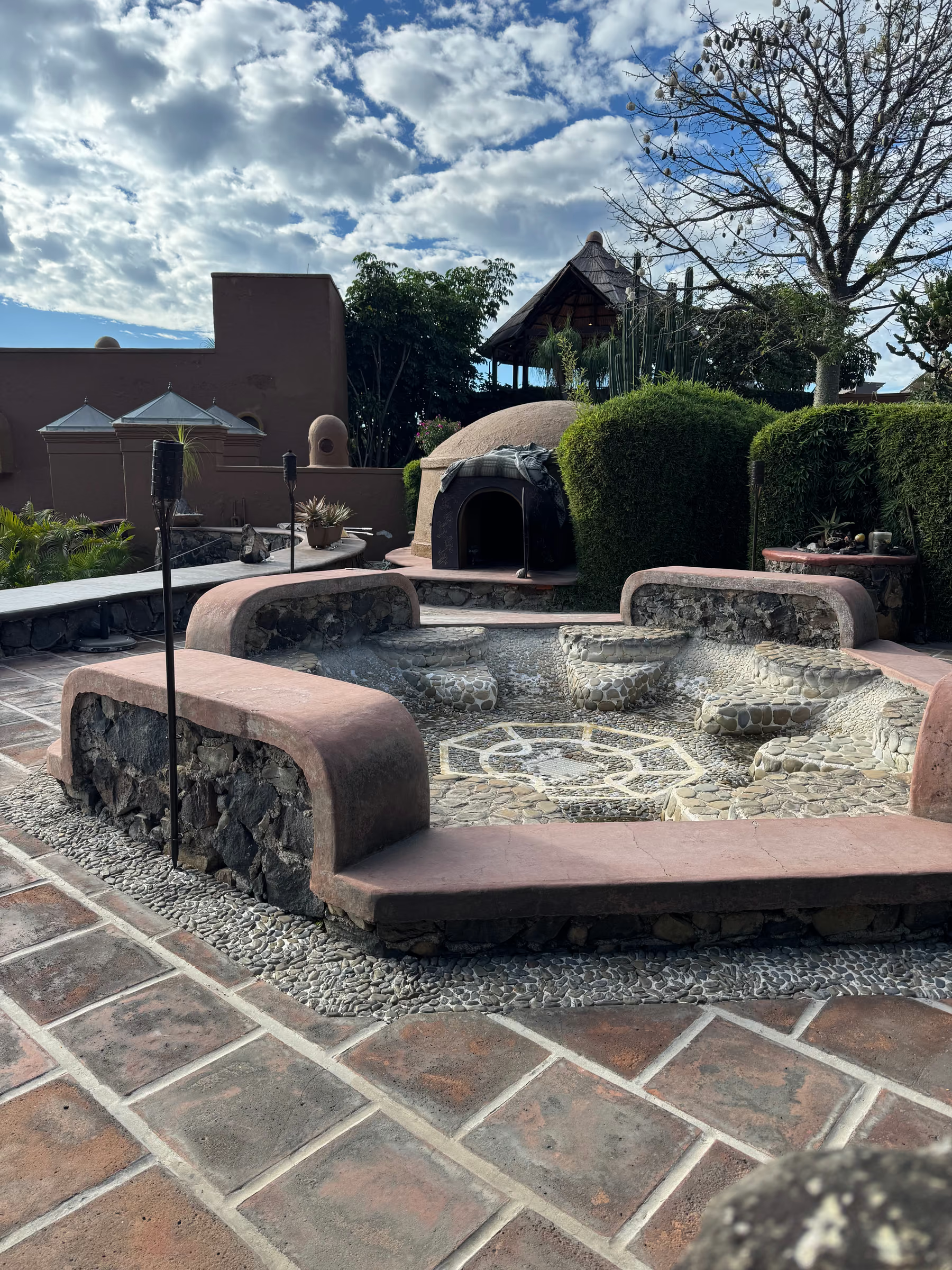
Last month I went down to Tepotzlan, Mexico to partake in a Temazcal sweat lodge (thanks, Natalie, for the rec!) The Temazcal is a traditional sweat lodge experience similar to those in Native US communities, but it generally takes place in a domed, masonry structure, and leads to a ritual bath outside. The ritual is long, carefully structured, and led in native languages and in Spanish through various gratitude practices. It was multisensory from start to finish, by which time we were covered in aloe from head to toe and our heads were swimming with herbal aromas and sweat. We ended outside in a bath designed for us to float almost weightlessly, staring at curious trees with gauzy fruit. It was powerful. My mind wandered little while I was inside, and when I came out my thinking was clear…
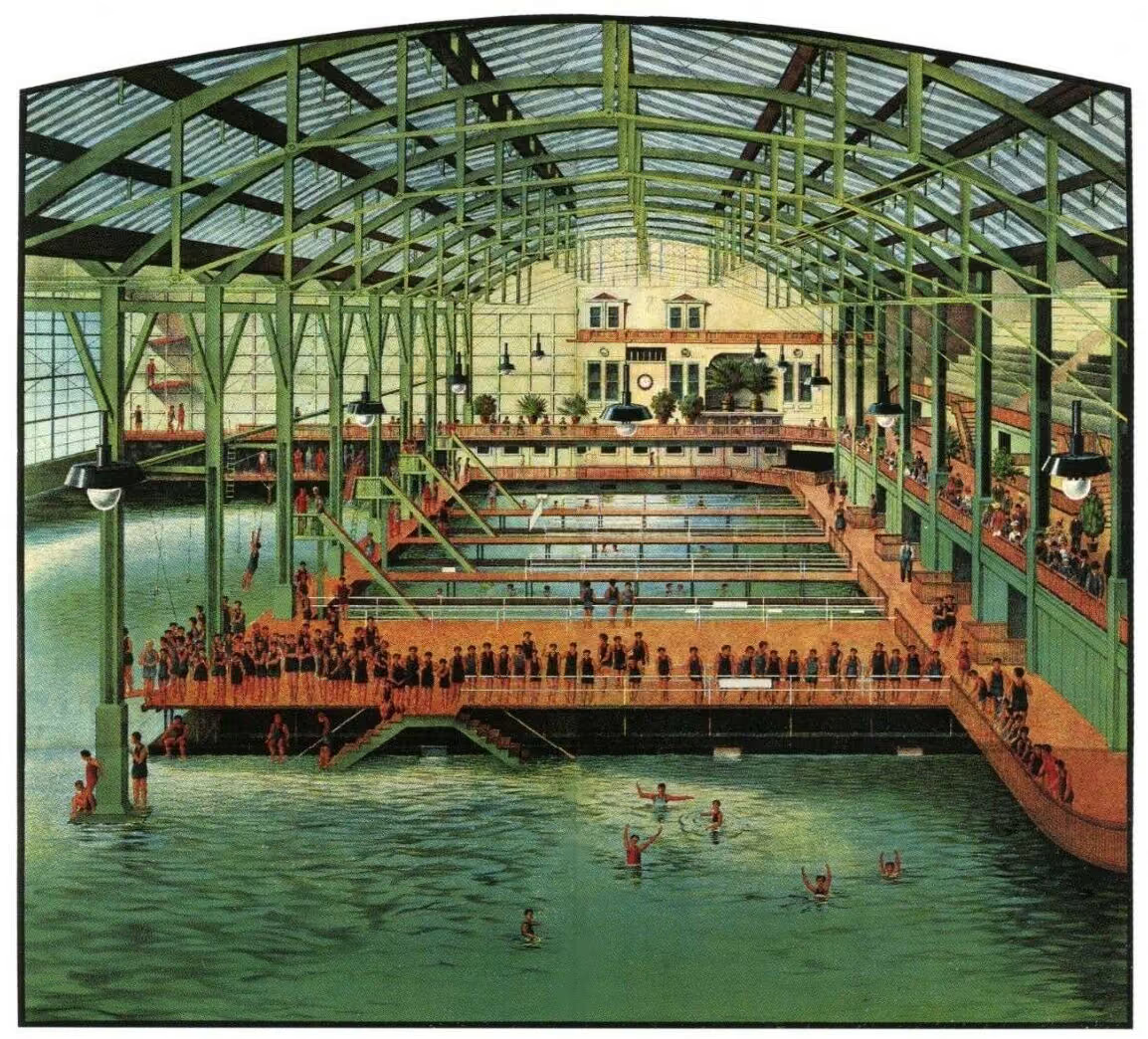
Sweat culture in the West is having something of a renaissance at the moment. It’s about time. I’ve just moved back to New York to discover new places like Othership and World Spa, which have popped up in the city to rethink the way we sweat together. It’s happening all over the country and in other parts of the Western World. We know that places like Finland and Iceland have long histories of sweat culture, but, as it turns out, so does the United States.Nell Waters’ fantastic podcast Soak tells incredible tales of enormous bathhouses of heated ocean water, gangster-run bathhouses that took over towns in Arkansas, and industrialists building seawater pumping systems to fill their bathhouses miles away from the ocean. Dig in; it’s fun.
As wonderful and helpful as the Temazcal* experience was, there was something a bit off for me. I paid for it, did little to no prep for it, only learned about what was going on by doing my own research and interviewing the “brujos” beforehand. During the Temazcal, we were presented with a full-bodied and detailed cosmology, and much of the ritual was in a native language I couldn’t begin to understand. This meant it was hard to become psychologicaly and ontologically immersed, though I did my best.
Traditional rituals are continuous with the cultures from which they emerge. The participant knows the cosmology, has an idea of the purpose of the ritual, understands the language or understands the sacred valences of the language. When I was a college student I volunteered for a time at Tom Porter’s Mohawk community in upstate New York. We spent days having conversations about the human relationship to nature and the need to be present. On the day when we participated in a sweat lodge with him—essentially the Thanksgiving Address in the heat—we spent the entire morning collecting rocks to make the fire. I wasn’t then Native, much less Mohawk, but when we entered the sweat lodge and began reciting the Thanksgiving Address, it made a lot of sense. It was incredibly meaningful—I was psychologically and ontologically immersed.
*The Spanish, who abhorred bathing, saw the Temazcal as an example of savagery. They attempted to eradicate the tradition, but in the 20th century, it was revived as descendants of practitioners drew upon oral traditions and Spanish texts. I was only able to find a few sources, mostly practitioners, of this info. If you know more, please share!
On the Bookshelf

Jeff Wirth is an unusual, brilliant force. Over the past decades he has developed a system of InterActing – improvisation that invites the audience in to co-create scenes. Jeff has trained countless InterActors, once spending nine-months in residence in Austin, TX, to develop a performance (the Deep Dive) that took over the city and involved several participants. Interactive Performance 101 is a guide to his methods. It’s a must read for anyone working in interactive theater.
Ailton Krenak’s Ancestral Future is a brief, poetic, rambling, sometimes visionary, sometimes basically anticapitalist, sometimes brilliant, sometimes just strange collection of essays on how we should rethink our world. It starts with a meditation on rivers and ends with thoughts on education as the empowerment of an already-valued human rather than a person to be created via education.
Krenak, an Indigenous Brazilian activist and thinker, is suggesting that there must be a fundamentally different way for us to think about our world. He’s suggesting that the answer to the ills of the Western World (mostly the environmental and psychological) are to be found in the worldbuilding of indigenous worlds. “This is the only way,” he says, “to conjugate ‘worlding,’ the verb that expresses the power to experience other worlds, which opens us up to cosmovisions and manages to imagine pluriverses…[evoking] the possibility of worlds that affect each other.”(p50)
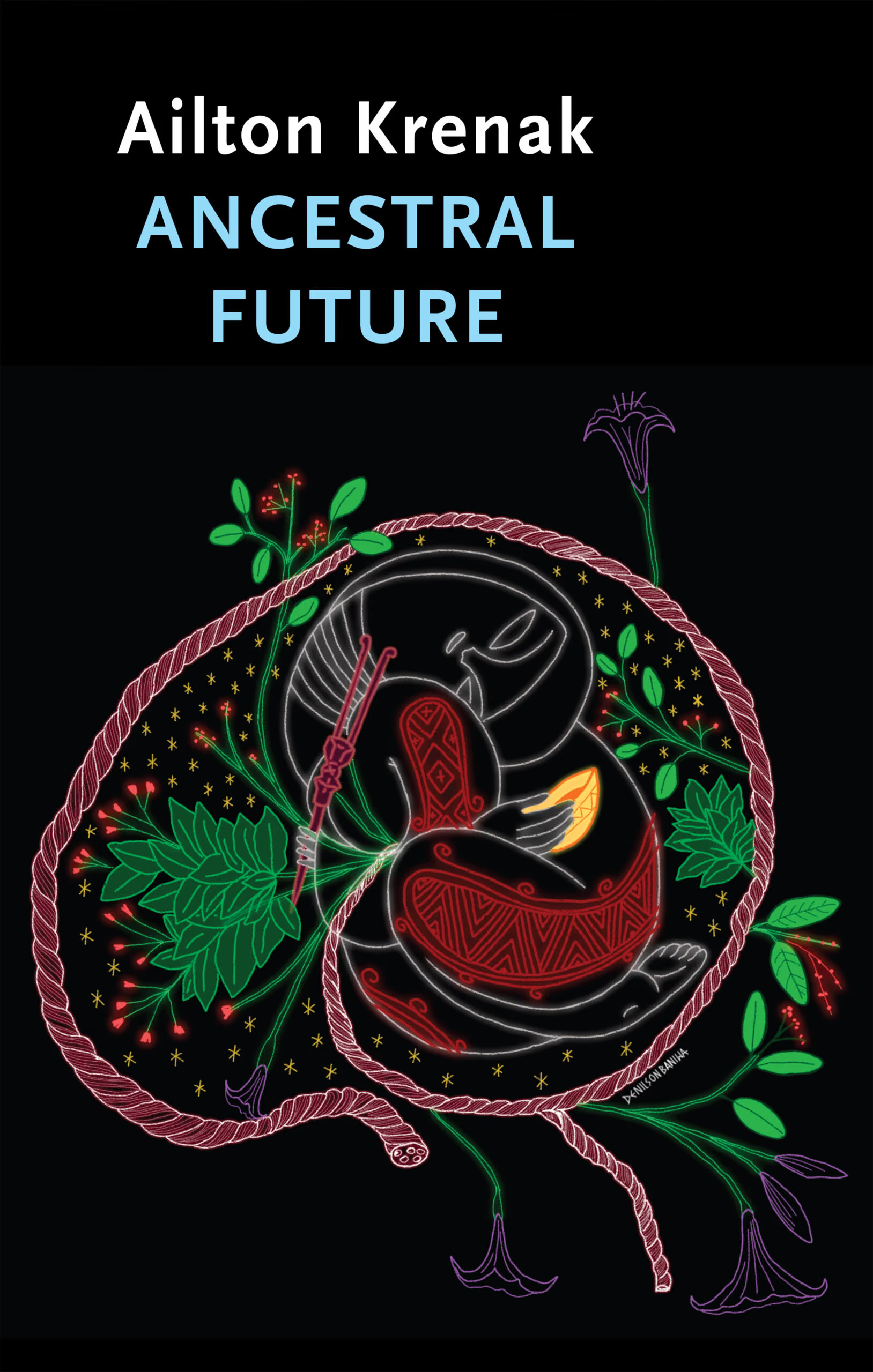
I have been reading it and I recommend it to you if you are interested in the topic because, though it is a little frustrating, it offers us a different origin story from which to build our world. I believe it will only be through the tools of worldbuilding that we will be able to address our environmental crisis, and that in order to build a different world, we must engage the intelligence of a different world, or we will be doomed to keep hitting our heads against the same brick wall. Krenak is a great place to start.
