How We Fix It #4: Childhood
The kids are not alright.
Don’t take it from me, look to Jonathan Haidt’s The Anxious Generation, (or Stolen Focus, by Johan Hari, or a thousand other books). The research is clear: anxiety is high, social intelligence is plummeting, girls are being traumatized by peers and by predators online every day, and boys are failing to launch, stuck in their rooms playing video games.
Or do take it from me: I have been teaching in higher education for more than fifteen years now*, and in that time I’ve seen young people becoming more and more lacking in confidence, more and more afraid of challenge. Yes, it’s anecdotal, but it’s also been shocking. For the past few years I was teaching thesis students in MICA’s Graphic Design MFA program. It’s one of the top programs in the world, and these students represented the leading edge of graphic design thinking, many of them going on to be professors in their own right afterwards.
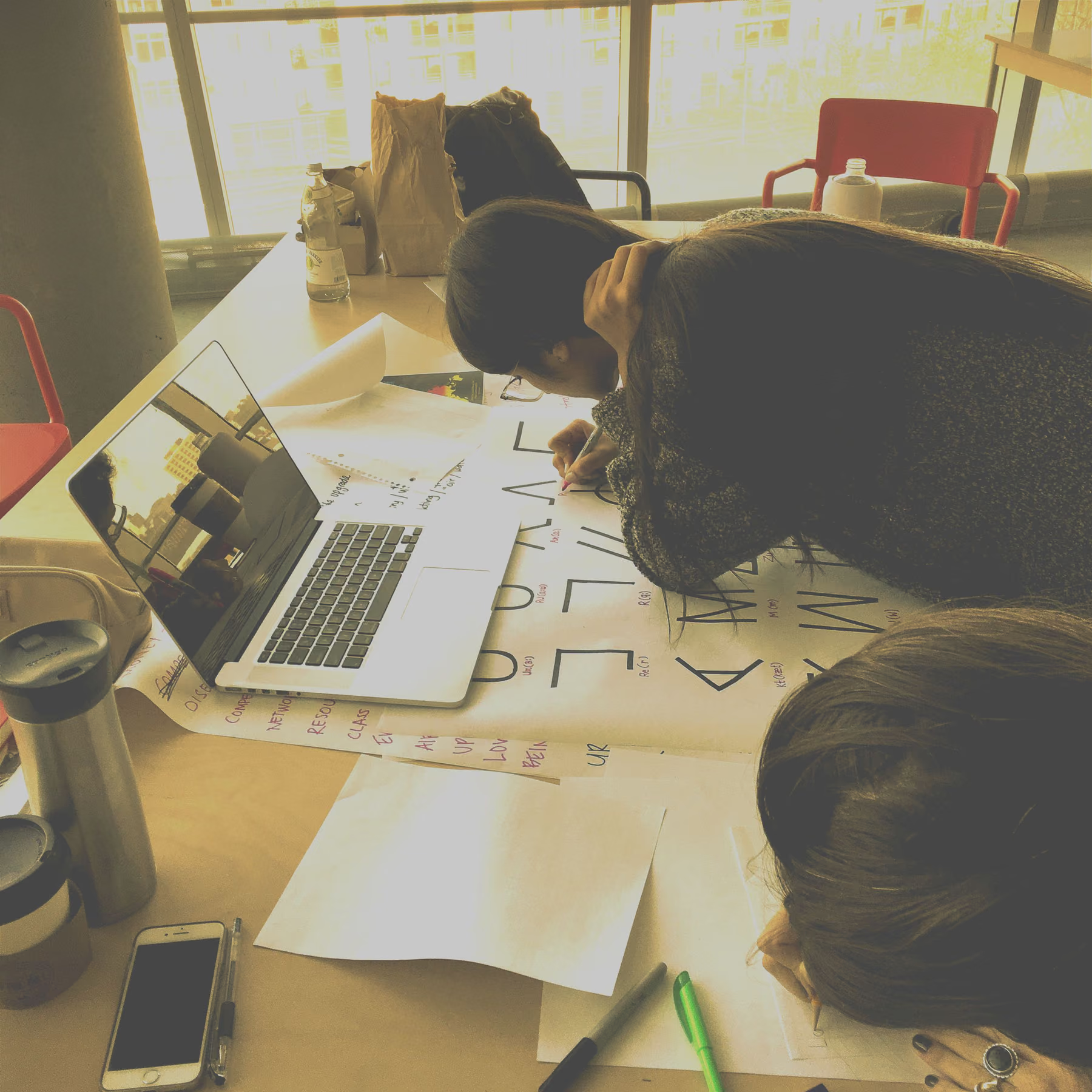
A thesis, I would say to them, had to have a thesis; that is to say it had to have an opinion, and it had to prove it.
More often than not they would say: Who am I to have an opinion? I would reply Who are you not to have an opinion?
This situation was clearly accelerated by the pandemic, but it was by no means caused by it. The lack of agency is startling.
With the great challenges coming our way—AI and the climate crisis and political turmoil and whatever else we have not foreseen—we will need active, intelligent, confident young people more than we ever have before.
What about you? Are you wracked by imposter syndrome? Terrified of contact with strangers? Addicted to your phone?
We have designed our world to make us this way.
Maybe it’s time for a redesign.
The Design of Childhood
Childhood is a design process. There are a thousand and one choices that parents make to structure our kids’ lives and twice as many to structure the lives of those who interact with those kids. Education is the clearest example of this; curricula are designed. Educational philosophies are experimented with, studied, iterated. You could reasonably consider most religious and small-scale social structures to be designs for childhood education, designs iterated over generations for community resilience and survival.
But if you have kids outside of a small scale or orthodox culture, you are likely raising your kids in a chaos of random design choices, commercial narratives, other people’s educational priorities, and lots and lots of stuff. The problems of contemporary childhood are myriad, and well documented. And there are solutions to each of them. But as with climate change and so many other big issues in the world, if we only deal with problem after problem we lose sight of the bigger picture. We never arrive at the question: what kind of a life do we want for our children? This is a fundamental difference between ordinary design and experience design: the former is about solving problems, while the latter is about identifying the way we wish to experience life.
What is our childhood Phase Zero?
Poll Results!
I asked in the last Phase Zero about people’s attitudes about AI. A little over half felt that AI was risky, if not very dangerous…
- 33% said they thought AI stood a good chance of killing us all
- 19% thought that it was risky, but we would manage it
- 19% said they were extremely excited about the future of AI
- 7% (not many!) thought AI was overhyped
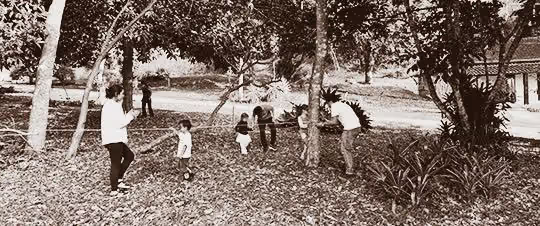
I just returned from a week in Brazil at the Centro Etievan. It was a family camp (I went with my wife and kids) where we hiked together, cooked together, had meditations, built a labyrinth with kids, did child-centered and non-child-centered activities, and talked about how we wanted to structure our kids’ childhood. We really got into detail. The group consisted of parents and educators and teens and younger kids, all of whom were in some way part of the conversation.
It was inspiring and provocative. It reminded me that it is possible to be intentional about how we raise the next generation. The it-takes-a-village-to-raise-a-child thing is true, and these people have been building that village. At one point in our conversations I spoke to some parents about their kids. The kids are alright, I heard myself say. It is so rare for me to think this. I knew the kids here were subject to all the same contemporary influences that my kids were – the screens and the narratives and the violence (perhaps even more violence) etc. etc., but at that time, inside the frame of that community, they were alright: enthusiastic, agentic, confident, included. Perhaps kids are more resilient than we think, they just need a chance for their best selves to be supported.
Parents tend to see our options for shaping childhood as extremely limited. We can choose a school (if we have choices). We can limit screen time. We can purchase eco-friendly toys. We can buy organic produce.If we are not parents, our options are even more limited; apart from adults paid to work with children, it feels like non-parents have no role in the development of children.
But these are all design choices. If we want to maintain things-as-they-are, we will choose from the options the world presents us. If we want to change that world, we must add other things to the menu. I believe we need strong, agentic, confident, intelligent kids if we are to be successful in facing what’s in front of us. We need that to be our phase zero. What would happen if we were to redesign our world from that point of view? What would be the family structures? What would be the community structures? What would be the role of people without kids? What would homes look like? What would toys look like? What would birthday parties consist of?
Everybody who makes anything has a role in this. The Centro Etievan experience was evidence for me that intentionality is possible, that we can all be part of designing childhood.
At Odyssey Works we are experimenting with a couple of things to this end. We have a monthly design of parenting meetup (on Zoom! If you’d like to join us, drop me a line.) It’s pretty informal; we just talk about things we’re trying to do with kids. And we are working on a 7-year narrative experience for kids based on mythic structures and designed to empower the larger communities around those kids to have mentorship roles in their lives. We’re hoping to open this to more families in the Fall. Both of these things are experimental and are prototypes and free. We are working together to figure out what is best. If you’re interested in these things, again, drop me a line.
On the Bookshelf
The Design of Childhood, by Alexandra Lange
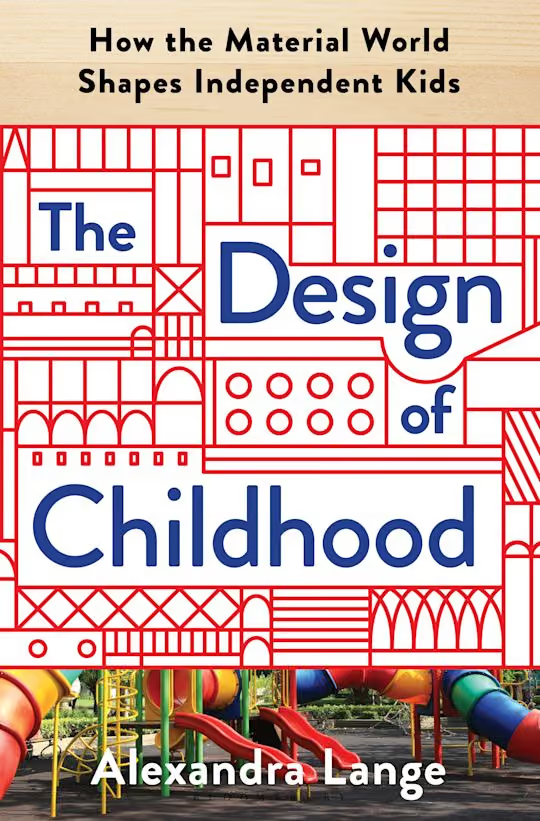
Because of the title alone, I couldn’t not mention this book here. The book actually deals with things I haven’t talked about here, for the most part: the objects associated with childhood. I’m talking about the Trip Trap Chair and the rise of plastic in toys and the evolution of the American playground. It’s fascinating, because every one of these designs comes with a philosophy about childhood and says so much about the values of the particular age in which it arose. The great fake out of design—across the disciplines—is that you can think of design as merely good or bad. This book really drives home how we ought to be thinking about design (as in what they teach in design schools) relative to the world we want to be creating. If you like design, this book is a fantastic rabbit hole.
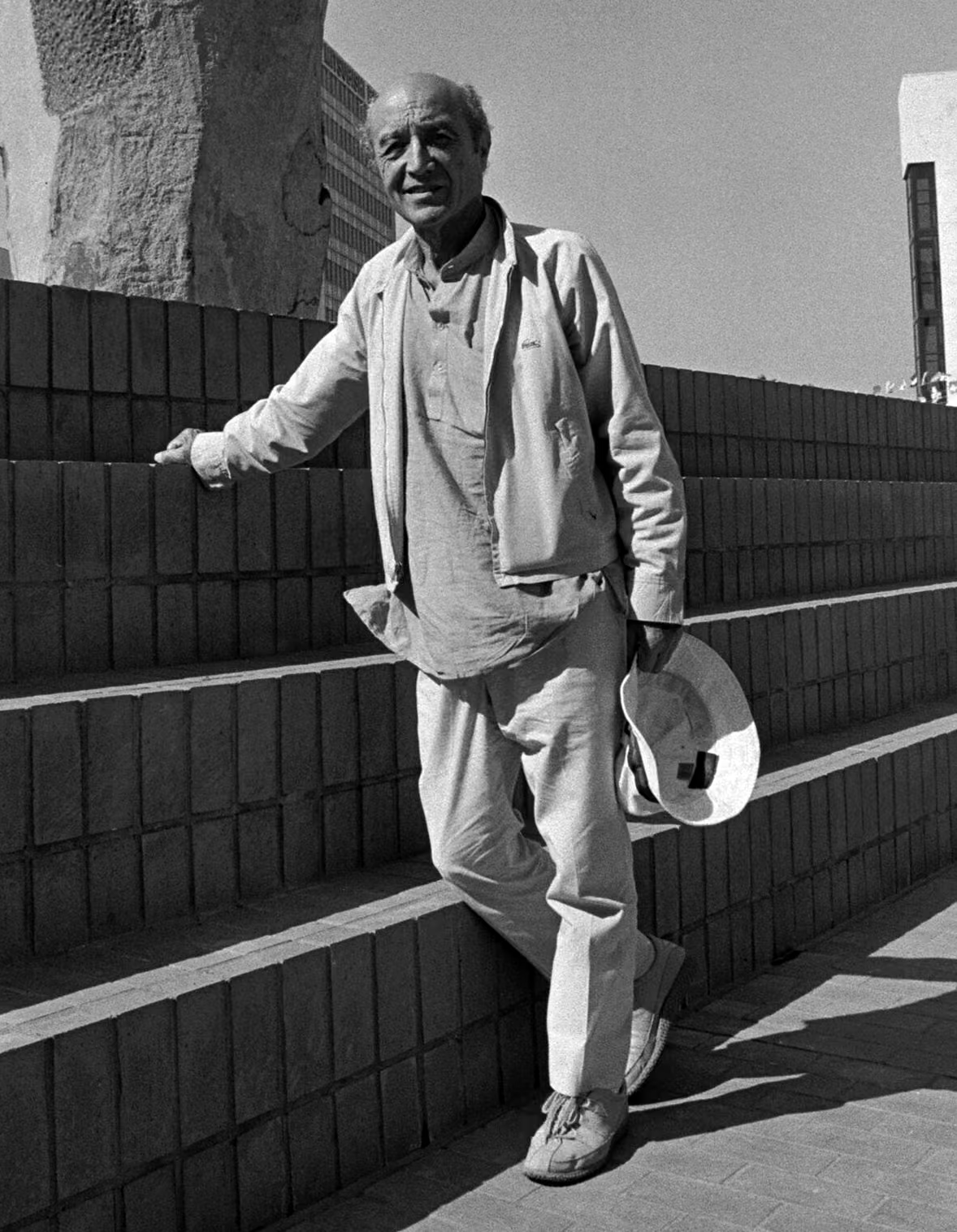
A great companion to The Design of Childhood is this podcast episode from 99% Invisible about sculptor Isamu Noguchi’s dream of creating Play Mountain in New York City. Noguchi is well known for his sculptures (you can visit his studio in Queens, New York) but less well known for his playground designs. Probably because he never built them. The podcast follows Noguchi’s decades-long dream of creating wild, enormous, free-roaming play spaces in New York, and how those dreams were crushed by New York power broker, Robert Moses. As it does so, it tells a tale of the choices New York has made about how people should live and what we think of children in public space. Though Noguchi never built his dream, there is a sort of a happy ending, but you need to listen to the whole thing to find out. No spoilers!
From What is to What if, by Rob Hopkins
If there’s a book that embodies much of the spirit of the How To Fix It series, it is this. In an earlier email I talked about the book Surviving the Future, by David Fleming.
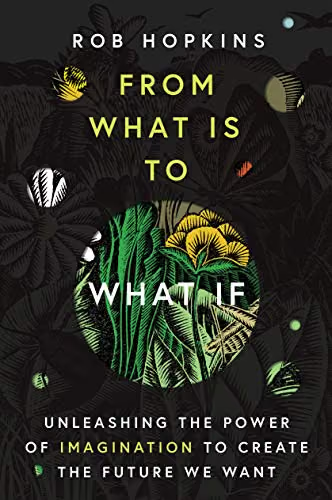
Fleming was Hopkins’ mentor, and has the same attitude around designing intentional communities without so much post-apocalypse. While Fleming predicated his ideas on a post climate crisis collapse, Hopkins works with communities active today. His premise is that we need wild imaginations in order to dream up the world in which we wish to live, and that we need to be cultivating those imaginations in our young people so that they will be well-suited to creating that new world. It’s optimistic and rooted in practical experiments already in progress.
(thanks for the rec, Melissa!)
Notes
*Well, I quit teaching higher ed last year so I could focus on Odyssey Works and the certificate program. It feels like even-higher ed, however we parse that.
