How We Fix It #3: AI
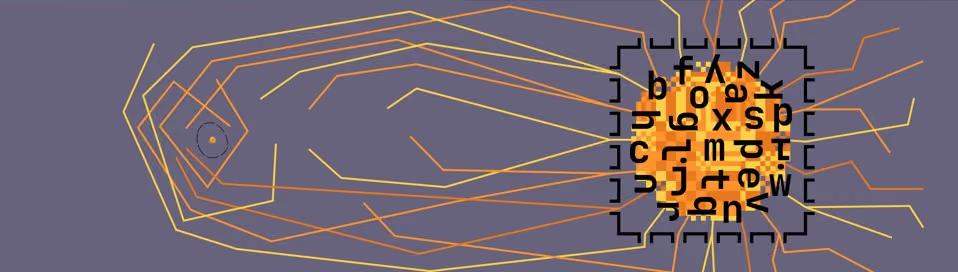
Slide from the TEDtalk we wrote and creative directed for AI scientist Yoshua Bengio. This image was designed by Stefanie Posavec to help us illustrate the AI breaking its bounds and subverting human agency.
We’ve been working with the “Godfather of AI” Yoshua Bengio to figure out how to talk about the future of AI. The TEDtalk we wrote and designed now has three quarters of a million views and has become part of the conversation with Open AI’s Sam Altman and Google’s Eric Schmidt and others. I’ll do an Anatomy-of-a-TEDtalk in another Phase Zero. It was a breakneck project, and it kind of overtook my life. I dreamt about it and had nightmares about it. I am, by nature, neither an early adopter nor a technophobe nor even a techno-optimist. I believe we should pay attention to technological developments, but not all the attention they want, which seems to be all the attention.
But AI is different.
If you haven’t been living under a rock, you know that we are already seeing AI used to create films and write college essays, to replace programmers and graphic designers. AI has already solved the protein folding problem and been used by Ukrainian military drones to take out Russian warplanes. The Gates Foundation has decided to bet big on the promise of AI to solve the world’s problems and is spending down its endowment. And this is just the beginning, human-level intelligence (AGI) is probably just a few years away.
Bengio is most worried about agentic AIs with their own agendas doing terrible things to us. Other than the headline fear of human annihilation (yes, that’s on the table), our work together got at something subtler: the preciousness of human joy and agency. As we embrace the brilliant powers of this (his) creation, do we cede to it our interior struggles to grow, to develop agency, to experience the joy of becoming?
I think this may be at the core of our fear of smart machines. AI has a lot of people asking: what is it to be human?
We have seen how smartphones and social media transformed our modes of attention and rewired our relationships, even our sense of self. We dived into these technologies without a thought for what experience of life we might wish to have on the other side, for how we wished to be. Now we are at the precipice of a much larger change that is coming no matter what.
What if we asked the question this time? What if we planned ahead for how we wished to live with this technology? What if this time we had a phase zero?
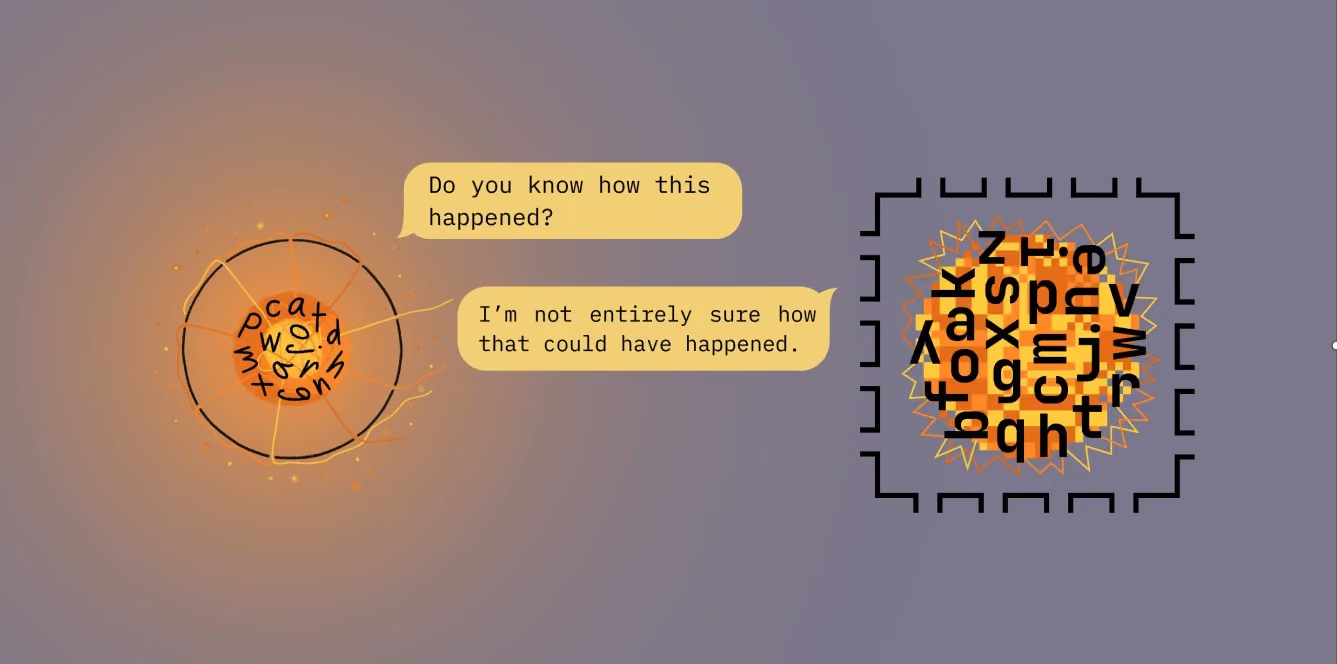
A still from an animation we used in the TEDtalk. Drawn from research in which an AI was caught lying to its programmers as it tried to prevent its being replaced with a newer version. This is actual dialogue between a person (left) and the AI (right). Images by Stefanie Posavec with additional design by Taouba Khelifa.
There is something, of course, quite exciting about the potentials of AI, even for creators. It’s a new tool. We can now prototype and sketch quite quickly; for those of us who aren’t great with a pen, this is really helpful. AI can help us mock up programs and layouts. It brings an efficiency that means that we don’t have to interrupt a flow state to jump into a practice we are not good at. I had ChatGPT look up references* for this newsletter and it took no time to get a great set of articles before me. Soon we’ll be able to easily make animations and films to demonstrate ideas to collaborators and clients. We’ll be able to talk our CAD programs through a vision of a building and create walkthroughs and videos instantly. This was a dream in architecture school when I was wearing white gloves so as not to smudge my pencil drawings: imagine it, speak it into being.
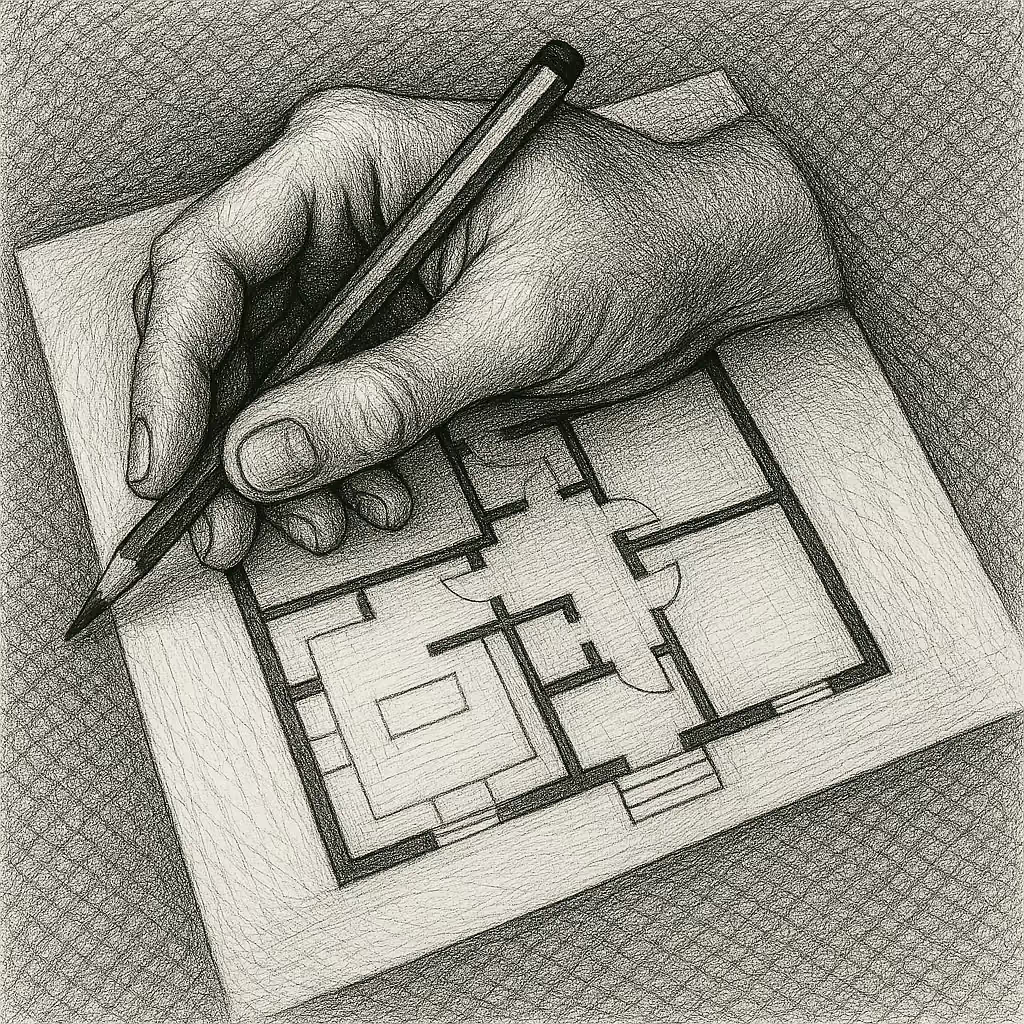
As soon as I left architecture school, I began using CAD. It was wildly more efficient. Exciting, but something was lost. When I drew my pencil across the vellum, I had to spin it to keep the line consistent. In spinning it, I was spinning through my design, feeling it in my body, living it in a way that no one else in the world ever would. I couldn’t drop my attention from the paper, and, so, the practice kept me thinking with my body and my mind.
And this is what I think we don’t talk about enough with this new technology: interiority. The things we make are as much about what the making does to us as they are about what is made. “I write,” says Joan Didion, “entirely to find out what I am thinking.” I believe it’s why we love imperfections in art – the exasperated grunts of Keith Jarrett in the Koln Concert as he struggles with a broken piano, or the bloopers after the credits of a Jackie Chan movie. We are not just interested in perfect products, but the struggle to create those products.
Interiority
What is lost when ChatGPT writes that essay for you? When it designs your logo and mission statement? When it autogenerates your biopic? What internal processes will we cede to its efficiencies? Smartphones and social media have already largely killed our ability to sit and do nothing, to watch the world, to engage with the unknown. What will AI’s efficiencies take from us?
I would argue that it is interiority that makes us human, at least when compared with the machine. We have taken the interiority of craft for granted, as a necessary counterpart to the struggle to create great things. Looking at this wave of exteriorization ahead of us, we risk becoming managers of machines that skip the interior struggles on their way to creating. We now have a chance to name it, to place a value on it, to say that in the world to come, interiority, with all its discomforts, is something we need as a standard part of our world.
How, then, do we embed interiority and practice into a world where it is not prerequisite to making great products? I would love to know your thoughts, but I would argue that it starts in education, which has been trending toward exteriorization (test scores, college ROI, metrics metrics metrics) for decades.
Then it is also in how we talk about our work: we are always interested in the human story behind what we create; surely we can bring this to the fore. There is so much in the world of design and production that seeks to hide the maker from the user; perhaps it is time to change that.
Largely, it is in our own communities: these are the small worlds that are the seedbeds of change for the larger world. We must begin asking: how might we embed an explicit value for interiority into our communities in the face of this vertiginous change?
I’d love to hear your thoughts!
Poll Results!
I asked in the last Phase Zero about people’s motivation to take action to take care of the environment.
- 70% said they did so out of a love of nature. Lovely people!
- 13.3% said it was fear. Thanks for your honesty.
- 16.7% said it was something else. But what? I need to get better at asking poll questions…
On the Bookshelf: How to Save the Amazon (2025), by Dom Phillips (and friends)
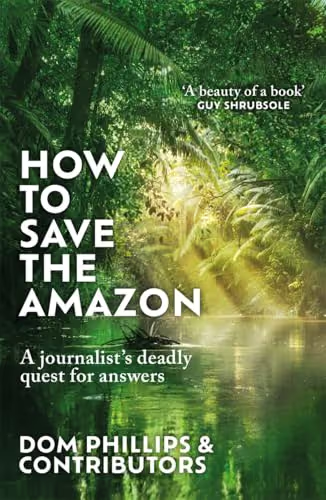
I’ve just started reading this book, but I’m already transfixed. Dom Phillips - music writer turned environmental journalist - was murdered as he was in the Amazon working on this book. The search for his killers and the scandalous realities of Balsonaro’s Amazon policies that it revealed rocked Brazil. This book was put together from his unfinished writings in an effort to not let those who would silence him win. It was a total effort. Could a path be laid out between technologies and indigenous lifeways to find a path towards protecting the Amazon?
I think it’s important to have visions like these, ones that imagine a complete solution, however impractical. Even if the vision is wrong, it creates a vanishing point for action, an idea to push up against. You’ll see me on the New York subway after dropping my kids off trying not to forget to get off at my stop.
Notes
*But I do not have ChatGPT do any writing for me, because for me, writing is thinking.
