Let's Take a Pause on the Transformation Economy
Let’s Take a Pause
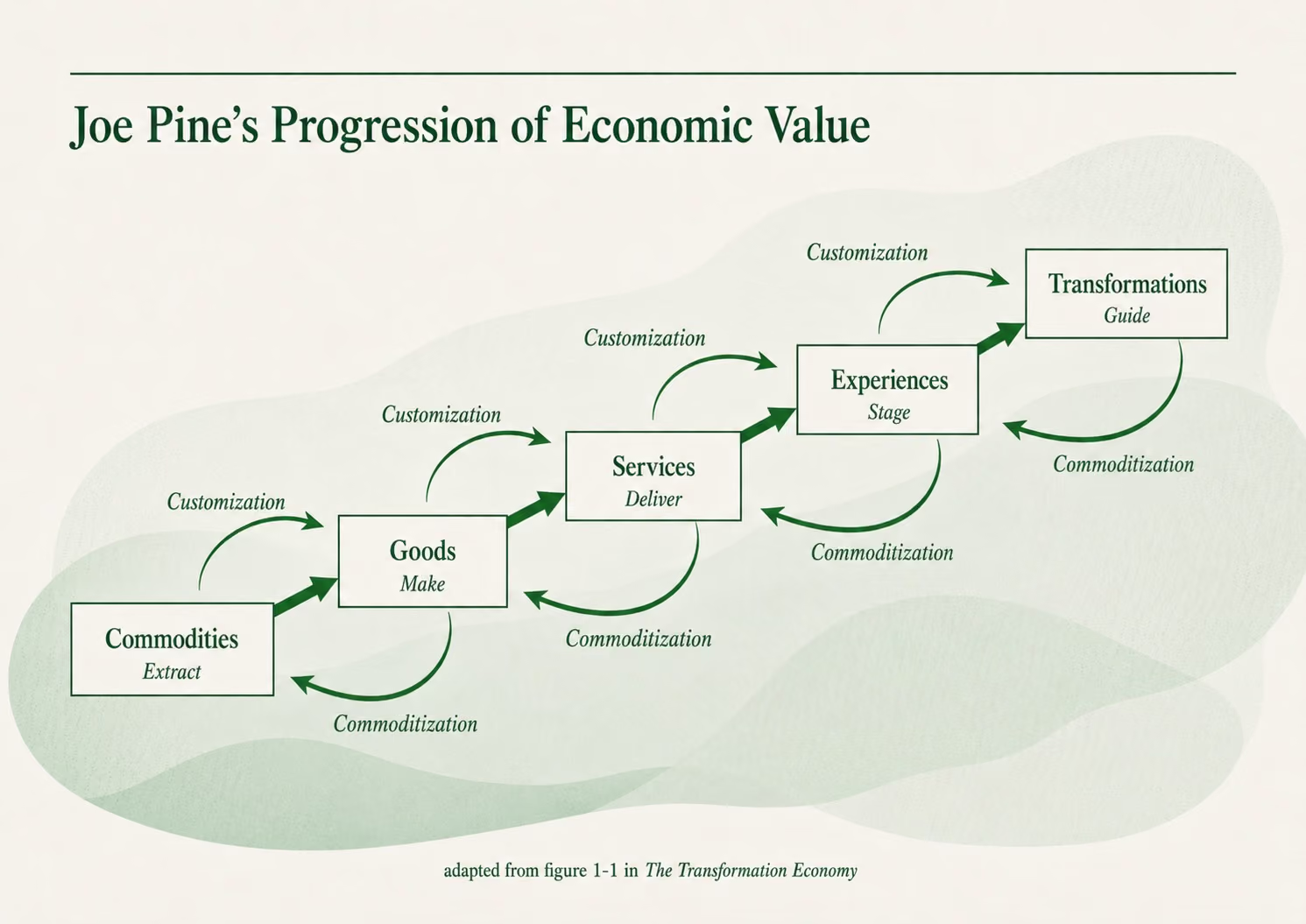
In Joe Pine’s new book, The Transformation Economy, he outlines an escalation of value from goods to commodities to services to experiences (this is where his previous book, The Experience Economy, landed twenty seven years ago) and now to transformation. Transformation, he says, is not just experiences but experiences that leave us changed. He cites, for example, Calibrate’s program where people on GLP1 weight loss medications are enrolled in a lifestyle system that helps them not just lose the weight but live differently so that they are able to keep the weight off and live healthier.
This is great stuff, and, for those who are interested in experience design, the way we’ve always thought things should happen. Pine talks about considering not just the event itself – the ordinary touchpoints or the direct interactions someone has with a product or a service – but the way the customer arrives at the event and leaves: the long-term impact. We should design for that, he says, as that was the key to human flourishing. I couldn’t agree more. Odyssey Works has, in many ways, been a laboratory for this way of working. And we decided to pull our certificate program out of academia – risky as that was – to build it on our own because we wanted to build it for this kind of transformation.
So why object? After his talk in London last month,an audience member pointed out that the escalation of value suggested that these kind of high-intensity offerings would be only for the wealthy. Pine leaned in: yes, he said, at first they will be, but ultimately they will be so standard a practice that some of these transformative experiences will be available to the rest of us. He pointed out that cars, at first, cost the equivalent of $100,000, but after Henry Ford’s innovations they became affordable for the common person.
Several people walked out at this point, but I tried to hold these two things in my mind: the trickle-down economics of human flourishing and the proliferation of cars. Pine was not wrong about how the economy works. He was not wrong about how the Transformation Economy works. But with these two things in mind together how could one not feel just a little bit sad? The experience design of transformation, whose unlimited brilliance can potentially solve any problem, held up next to one of the greatest problems of our day, our world built on fossil fuels and mass consumption. Oh well? That’s just the reality of our world?
I don’t need to convince you that our world is in crisis, but one must ask whether, if the tools of transformation are the keys to human flourishing, which is to say to us becoming who we need to be to live better lives, the tools cannot be turned toward addressing this crisis. If it is because of who we are that the climate is in crisis, that the politics of today is hot and violent, that children are addicted to their phones and grownups are isolated and lonely, then surely we can consider an approach to transformation that might address these things. Or we can give up, make a few bucks helping some wealthy people flourish on a Martian colony and call it good.
Transforming the World
Consider, for instance, the loneliness epidemic, so pointedly outlined in the documentary Join or Die. It is a situation designed into being, and we know the causes: fear-mongering news, an ever-intensifying design philosophy of removing the pain points and discomfort of human contact, social media that supplants real socializing, the thinning out of religious organizations and clubs, the shock of the pandemic. But we can find the solutions in the problems: religious organizations, for instance, structured community around collective values.
There are people out there utilizing the tools of transformative experience design to make our world better, not just to make a buck.
Angie Thurston, for instance, at Sacred Design Lab has studied this and developed “The Formation Project” which is not tied to a belief system but designed to offer the benefits of value-based organizing to people outside religion. Alain de Boton writes about this in Religion for Atheists.
Powwow, which was designed slowly and intentionally, does this. Or we can keep our kids away from social media, not just by suing Meta, but by telling a different story of the world to our kids, one in which real connection has more value than online connection. Odyssey Works is currently working on a community project that does just this.*
Now keep going.Could the climate crisis be a matter of worldbuilding rather than technology? Could the political divide and the rise of authoritarianism be addressed not just with voting but with the imagining of a better world?
Could we step away from the ennui and cynicism and look at the tools of experience design and transformation as a world-changing power that could be in the hands of individuals, small communities, and mission-based organizations?
In his book, Pine claims that, for businesses, “fostering human flourishing is the reason for being” (page xiv). Even for Adam Smith or the free-market economists of the Chicago School, this is a stretch, some magical thinking that the market can not only manage the movement of goods and services, but our ethics. Let’s be clear: businesses exist to make a profit. If Pine’s claim were true, we’d be living in a utopia right now. Consider the most transformative offerings currently on the market: social media and AI; have they caused human flourishing? Will they? Do we agree with the richest man in the world, Elon Musk, when he says he doesn’t need to do actual philanthropy because his companies “are philanthropy”?
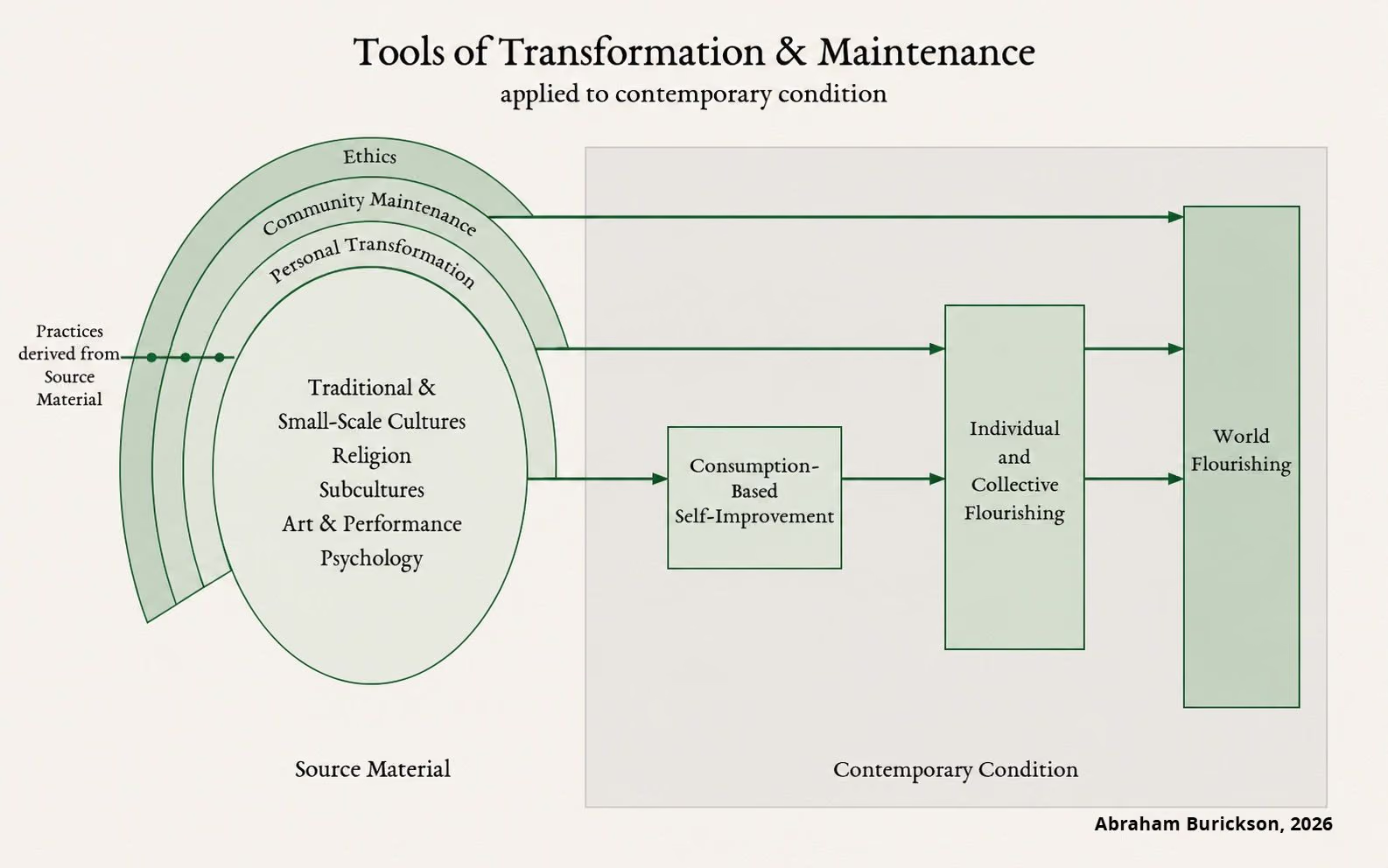
As far as I can tell, nearly all the tools of transformative experience design are derived from longstanding human practices. Religions are a deep well of knowledge about user journeys, events, multisensory immersion, human transformation. Small communities have always been built around effective storytelling. Indigenous cultures have always worldbuilt much more balanced relationships between humans and nature. Isn’t there something a little crass, a little colonial, about extracting these understandings and offering them as products only for the rich?
Let’s all just take a breath…
Priya Parker, the world’s expert on gatherings, just put out an article titled Don’t Let Gathering Become a Luxury Good. The same goes for design for transformation. I’m not saying you shouldn’t create the best businesses you can and offer transformation and get paid for it. I get it, healthcare is expensive. But what else is possible?
I actually think you should get Joe Pine’s book and read it. It has some good case studies and structures for thinking about how to design for transformation. But, in its suggestion that we should render all our meaning into the hands of business, it should also be a shocking call to action for us to ask if there isn’t another way. What effect do you really want to have on the world?
I really have nothing against the wealthy customer trying to lose weight on GLP-1 and to keep it off. It’s a great application of the transformative tools of experience design. And that experience designer who got paid to create the system for them deserves every dollar. But this is a treatment for the symptoms, not the cause, and the medicine may be worse than the disease. Shouldn’t we consider the worldbuilding of a world that makes these interventions even necessary?Shouldn’t we take a breath as we race to extract value from these practices and consider how they might be applied to the lives we really want to live?
Also: no AI was employed in the writing of this text. I did use ChatGPT to help with the illustrations, notably the second diagram, which I drew by hand and asked AI to clean up. It took all day. It would have been much faster to do it from scratch on Illustrator.
