Mystical Pedagogy
We just wrapped up the third year of the Certificate Program with a presentation in two buildings full of experience design prototypes. At our celebratory final dinner I was having a conversation with one of the students about orthodoxy and mysticism and their relationship to pedagogy. If you’ve been reading these newsletters, you’ve heard me mention the great debt that contemporary experience design owes to religious practices around the world, and I may have mentioned that in my twenties I studied sufism. But it wasn’t until the night of our dinner that it became clear how the way we’ve been trying to structure experience design teaching is, essentially, a mystical approach to education. By this I mean an approach centered on relating a core set of principles to a personal question whose greatest outcome is transformation rather than standardization. Bear with me…
I’m no religious scholar, but in my experience, religious practices tend to pull toward either the answers or the questions, the orthodox or the mystical. Orthodoxy tells you how to live, prescribes a moral life, structures time through holidays. Mysticism invites the believer toward a personal relationship with the divine or the supernatural, which is the core idea of the religion. Based on what I’ve seen, pure orthodoxy would be will-less and unthinking. Pure mysticism would be formless and immaterial. I can’t say I’ve ever seen any practice that was pure in either of these ways. The tendency, however, is clear, and I would argue that many of the problems in our political landscape—both in the US and elsewhere—are due to an excess of orthodoxy; to an unquestioning adherence to prescribed ideas of good and bad. There is little need for empathy when your orthodoxy already has all the answers.
It is the tendency of educational institutions to bend toward orthodoxy, which is to say: standardization. This is testing and norming and rubrics and grades. To a certain extent we need this basic instruction—you have to learn to read, after all—but in higher education’s (understandable) focus on educational ROI, much has been lost both for the students and the field. Orthodox education presents students with materials so that they can become proficient in those materials. Mystical education, if I may call it that, presents students with materials so that their proficiency with those materials can help them answer their own questions.
Ideally, this is how a thesis-based education works – you study the basic material, master it, and then answer a new question for yourself and the field. But most people who complete higher education rarely approach their own questions. Mysticism requires devotees to continually connect their life experience to their studies; this means keeping the material connected to your question about a sense of purpose. Why can’t all education be this way? Rather than focusing on getting competent at Adobe products and then asking later why it matters to our sense of purpose, couldn’t we do both at once?
This does, of course, require a different teacher-student relationship, one in which the teacher must be a master of the material but must also model the ongoing questioning…
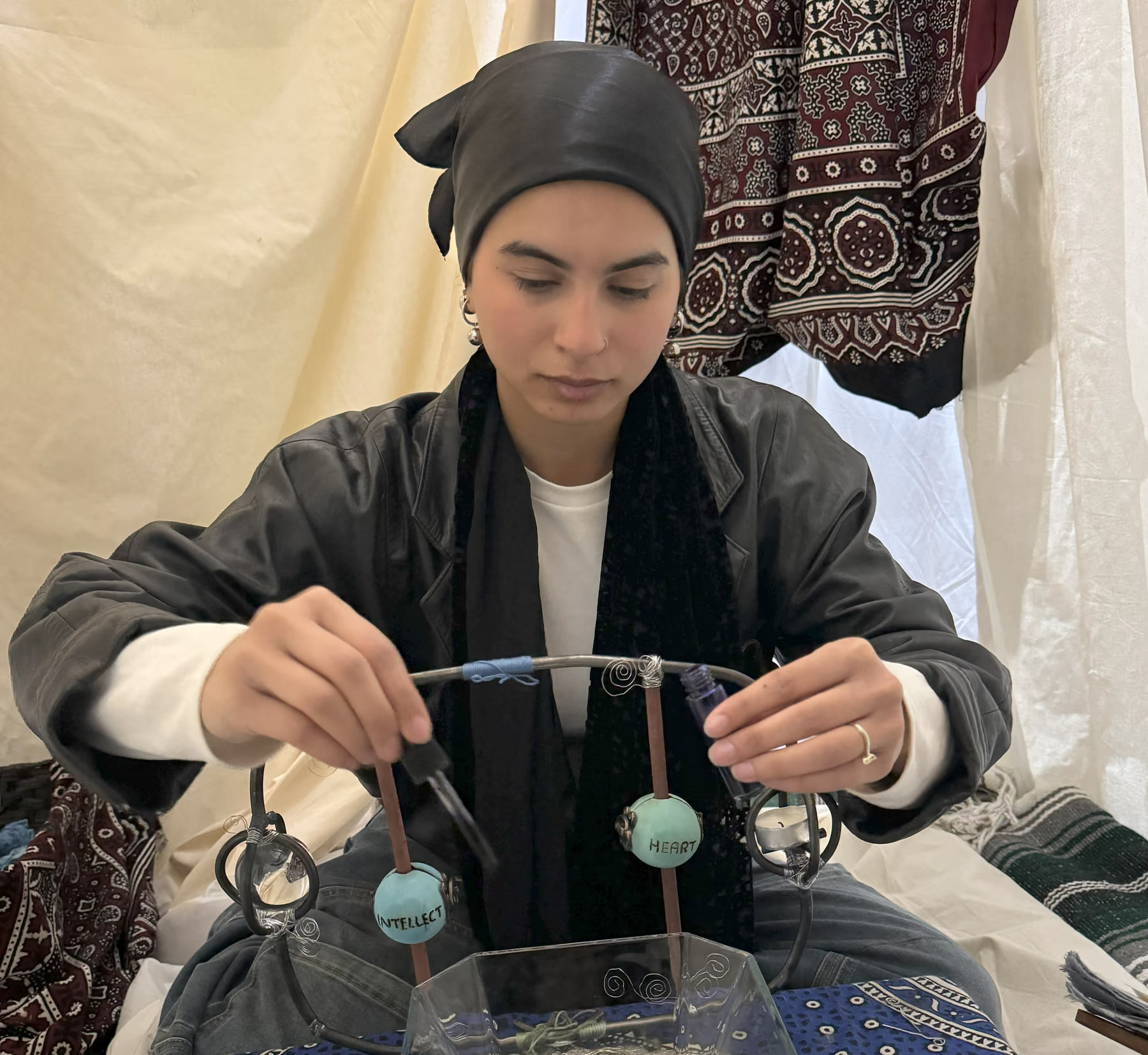
I could brag all day about the amazing work of my students this year but there’s one project that is particularly relevant here. Zainab Azhar’s The Map to the Inner Maker was a storytelling experience designed to guide a visitor into a relationship to her own, Ancient Greek and Sufi-informed, mode of understanding the inner creative force. Her Lived Research this summer was about makership, the archetype of the maker, and Sufi philosophy. What inspires a maker to make? How do they understand making when the inspiration is constricted? I don’t have space in this newsletter to properly explain it, but it revolves around a diagram of creativity she developed:
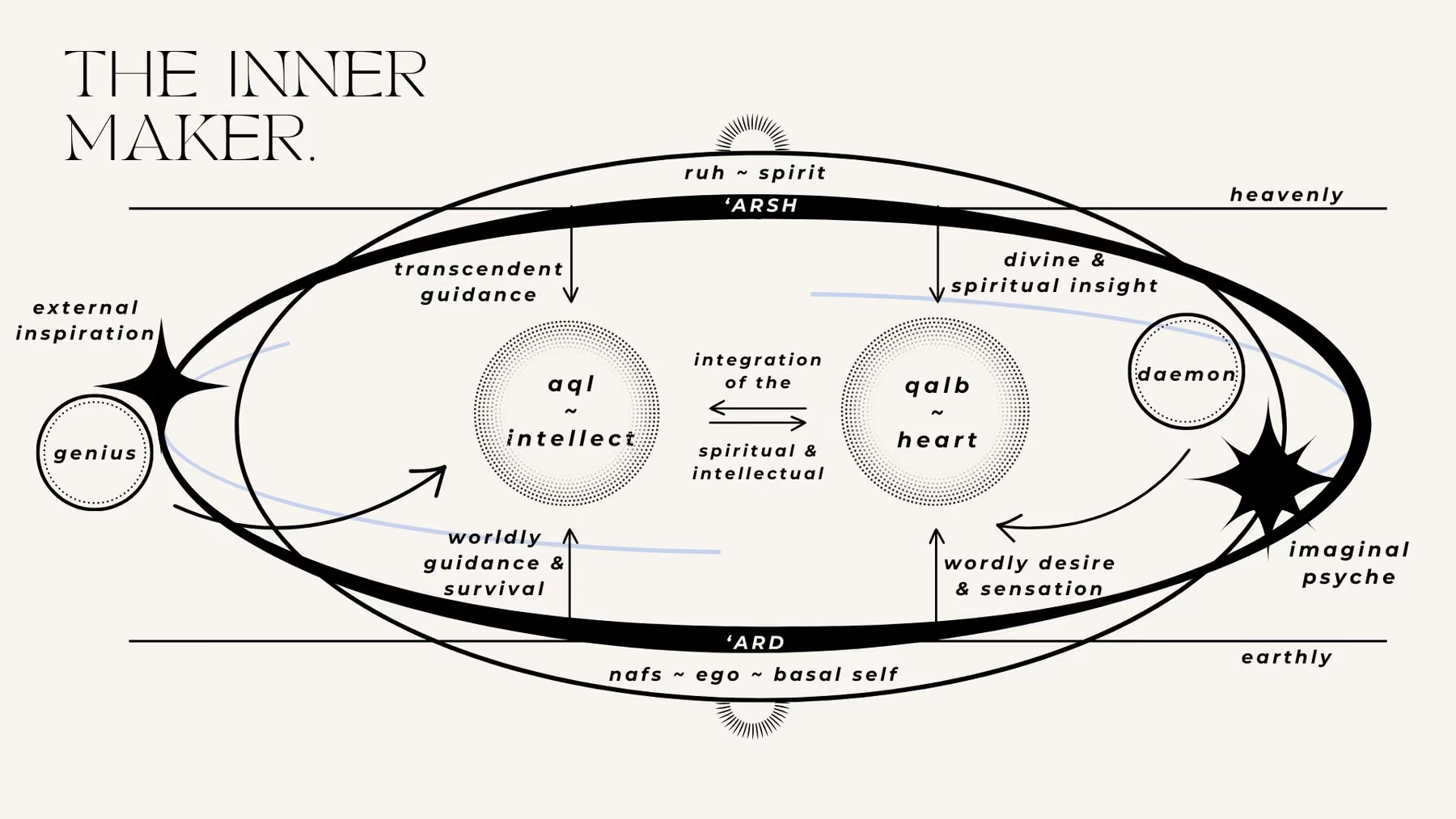
Zainab’s research uncovered a notion of creativity moving between the heavenly and the earthly, contained within the mind (‘aql) and the heart (‘qalb), and powered by the enigmatic spark of inspiration. One uses the diagram machine she constructed to find one’s own current place between these poles, tracing the heart and the intellect as they are pulled between heavenly and earthly forces. The 1-on-1 experience she presented brought an audience member on a journey of discovery, through storytelling, of their own relationship to the diagram. The ultimate end was a relationship with the true messaging of their own innner maker.
“I’ve discovered,” she said, after her Lived Research, “that story, myth, lore are essential to how I build frameworks, be it for an experience, facilitation, gathering, a conversation. Because story is really just a manner of truth-telling…”
What if such discovery was the aim built into all education?
On the Bookshelf: The Thing The Book
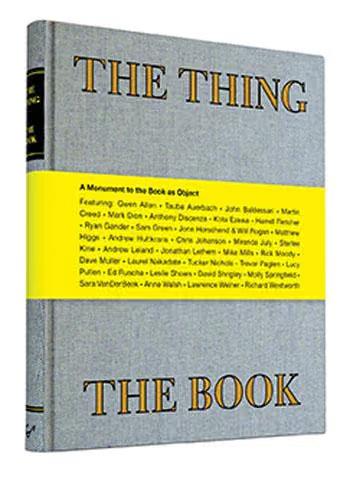
A writer friend of mine once called books “powerful little narrative delivery objects.” This book explores that capacity and all its structures. Books are designed objects whose long traditions mean that when we turn to the first page we already know how to behave. We hardly think about structures such as chapter titles and tables of contents and page numbers (until we see them done differently, as when in a Spanish book the table of contents is at the end. How strange! we think, and for a minute the book is a whole new world.) But what a wild thing that a few sheaves of paper, bound together in a codex, can walk us into a new world!
The Thing The Book is the Book (the thing) I wish I’d had when teaching my Design Writing Research class at MICA. It explores both design and text as modes of communication, of setting expectations, and of having fun. It’s a playful collaboration of tons of writers and artists exploring all the possibilities of the book. There is a surreal table of contents, an essay on the history of artists’ books, play with typography and endpages and footnotes. The contributor list is lengthy, including Rick Moody and Miranda July and Ed Ruscha and Laurel Nakadate and many more. It’s referential and irreverent. And couldn’t we all use just a bit of irreverence right now?
