Contested Placemaking
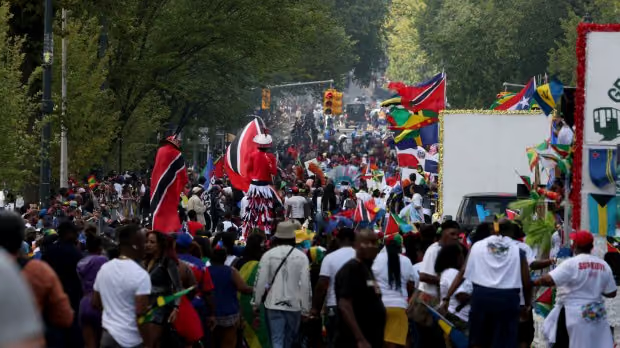
I just moved (back home) to New York. It’s a crazy thing to do with a family and a house full of things. I arrived on Labor Day, during the West Indian Day Carnival. It took two hours to traverse what should have been a ten-minute drive. At one point I just turned off the car and took it all in. Far from the actual parade, there were biker clubs and people running down the street wearing nothing but national flags. Restaurants had been set up on the sidewalks. Music blared discordantly from so many sources that their locations were masked in much the same way that frogs chorusing around a pond mask each other. Police—erstwhile agents of order—shouted and sweated in their attempts to move people and cars through space. One gave up and took off his hat, shrugging, laughing.
What is a city? When I was teaching architecture it was a fun question to challenge students with. Is it merely a location with significant population and a municipal government? A site of great economic activity? Or is there a more subjective understanding, one that accounts for the romance, the sense of possibility, the attraction or terror of the place?
When I was in my 20s I recall wandering the streets of Cairo, feeling that I could walk forever and find no end. There was the mattress district, then the auto parts district, then the oud district. It was a sense of infinite depth. What a city! By contrast, the empty downtown of Wilmington, or the set-piece perfection of Venice felt devoid of mystery. A true city, it seemed, had endless depth of life, of possibility. An architecture professor of mine defined a city as a place where you can turn the same corner of the same block day after day and always find something new.
Cities, of course, are enormous experience design projects. The daily lives of millions of people are shaped by these designs. Importantly, however (to quibble with Haussmann and Moses and Niermeyer) cities are collective, contested designs. An overcontrolled city, like an overcontrolled language, loses vitality and may ultimately wither and die.
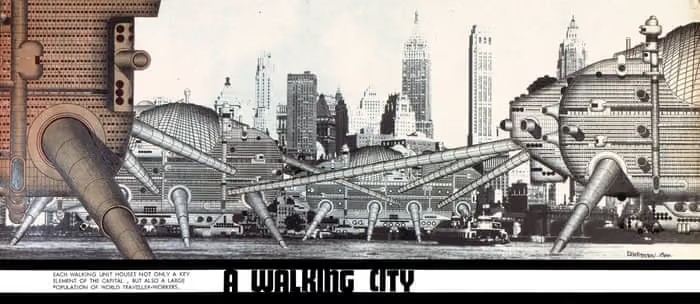
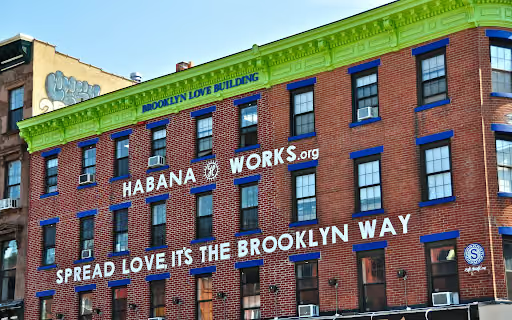
I believe that it is the contested nature of the city that makes it feel alive. Tourist traps corral you into guided paths through crafted narratives, but we know this is not the live story, and we long to get off the beaten path. This same sense of deadness comes with any experience design which is too fixed. You save up to go on safari and look for discount codes to the zoo, though the latter guarantees a greater diversity of animals. You “discover” a great restaurant somewhere in Brooklyn but never at the airport food court. You tell stories of the unexpected one-on-one in the middle of Sleep No More.
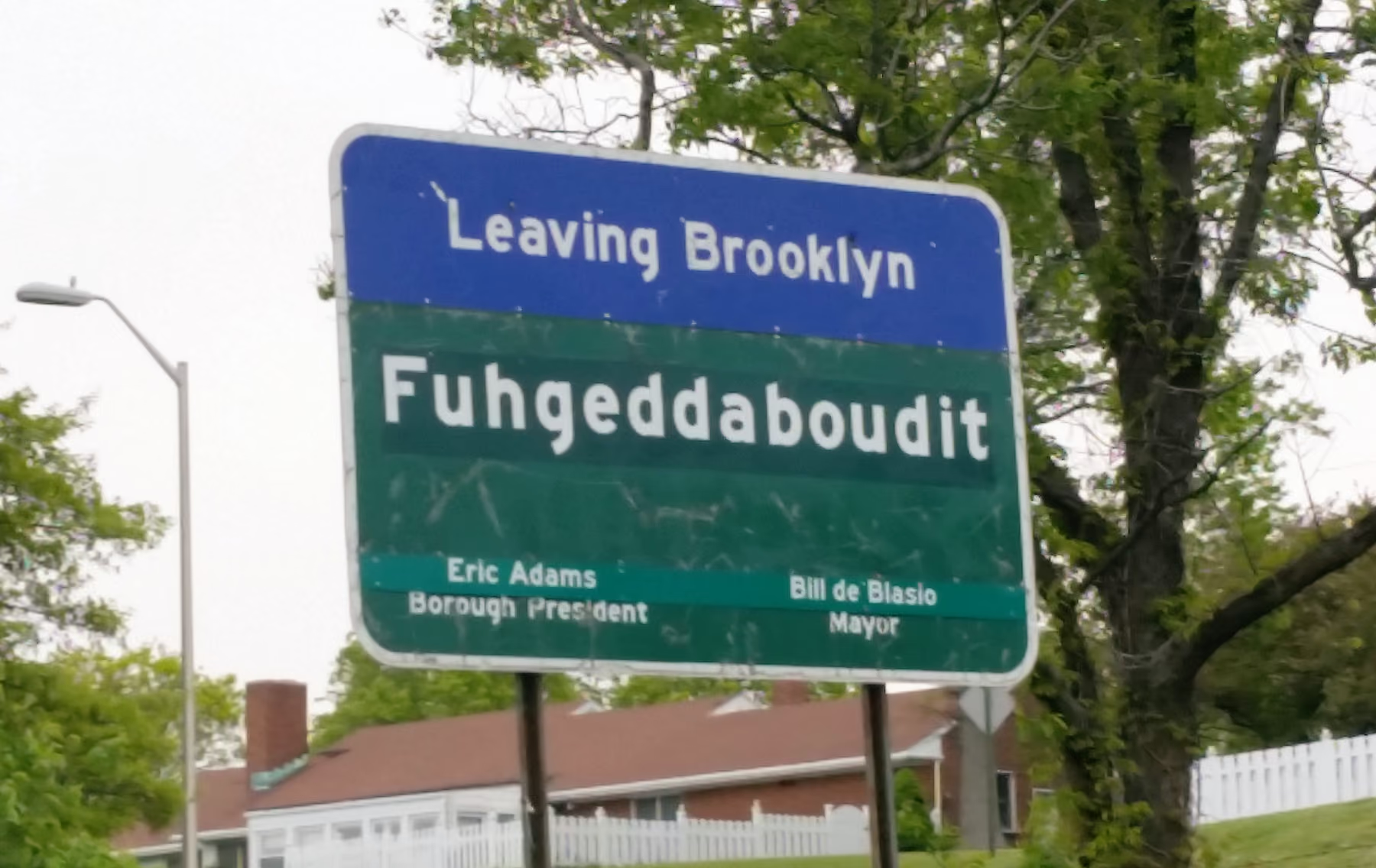
And this is what makes placemaking such a dynamic, exciting project: it is an intervention into an already existing system of communities and spaces. Sometimes this means building a community garden or a new playground. Sometimes this means redefining existing places with new ideas of how they should be engaged with. Sometimes this means working together to rewrite an origin story.
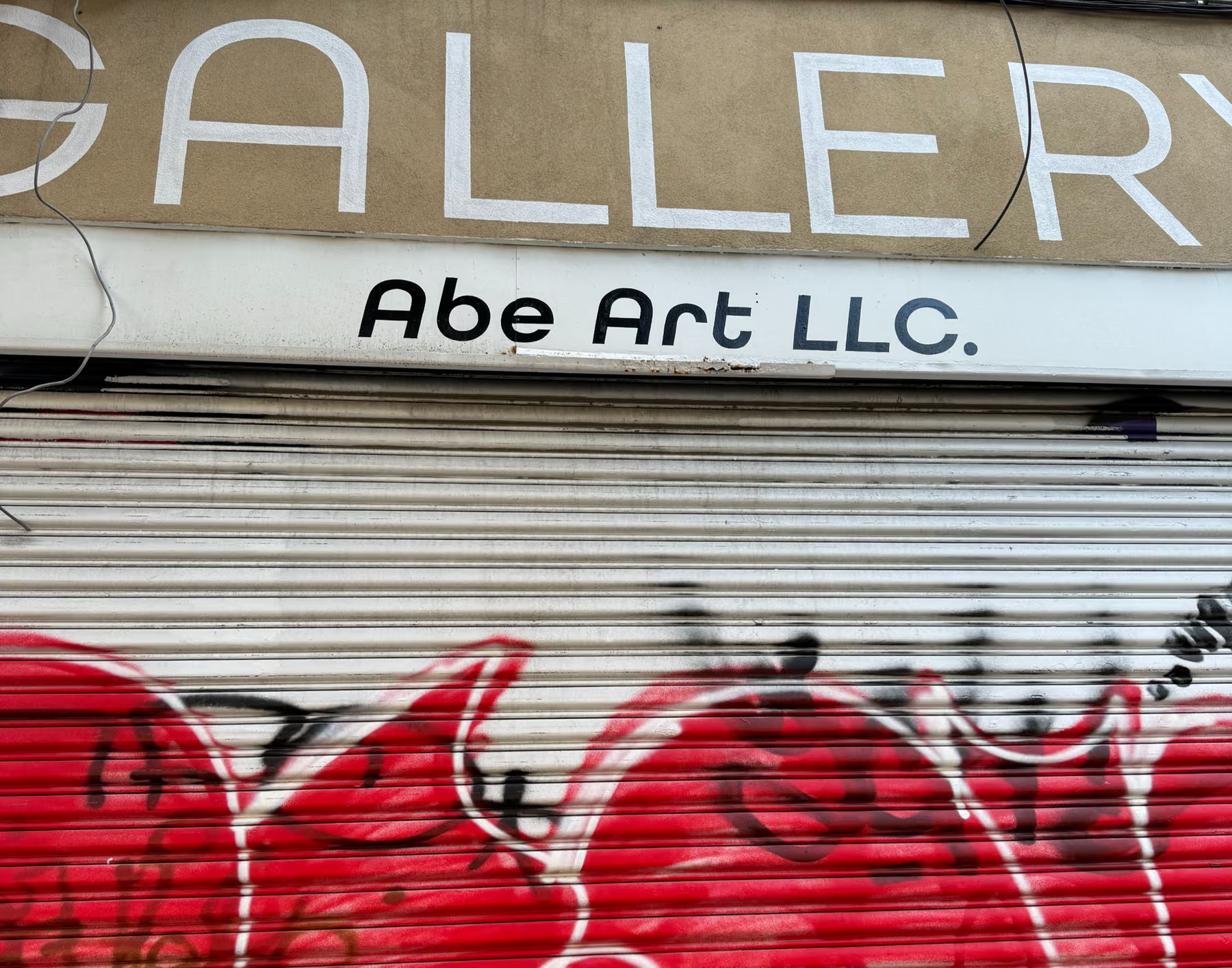
It’s such a quintessential experience design project because if you think only of the thing you’ll build, you’ll fail. Placemaking demands some understanding of the community, and some gamble that your offering is what speaks to how they wish to understand their places. Much of this, when it fails, is laughable. When placemaking succeeds, it’s magic.
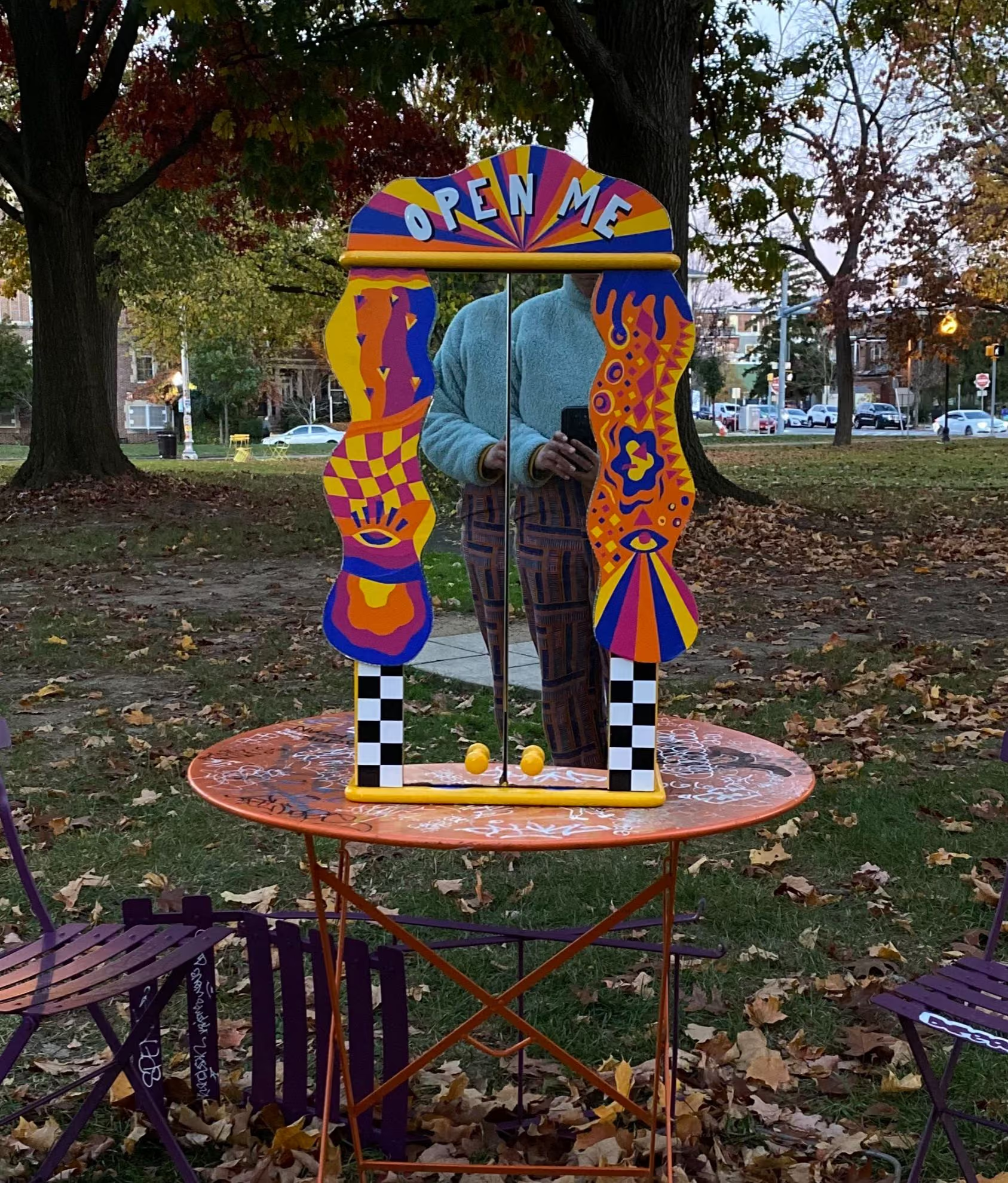
Hailey Jordan’s Joy Box is a wonderful example of brilliant placemaking. Begun as her final project for the Experience Design Certificate Program, the project is a nod to the Little Free Libraries people install in their front lawns. Jordan loved the way these created community-driven node of exchange, but wanted to take it the next step. The Joy Box contains notepads, legos, objects of play and analog bulletin boards. It is a play-based intervention into the public landscape, and, installed in Baltimore, it has been the center of spontaneous gatherings and planned events.
I mean, who wouldn’t want a joy box in their neighborhood?
I had a great chat with Alex Leff on my favorite podcast: Human Nature Odyssey. Honestly, we got a little silly at first, but then got down to business. I’ve been thinking a lot about how we use the tools of experience design to address our wicket problems - this was the focus of the episode. Check it out!
Still reading? I think the late great poet George Oppen covered most of this topic in the last century in his long poemOf Being Numerous. Here’s a relevant excerpt:
The emotions are engaged
Entering the city
As entering any city.
We are not coeval
With a locality
But we imagine others are,
We encounter them. Actually
A populace flows
Thru the city.
This is a language, therefore, of New York
…
One must not come to feel that he has a thousand threads in his hands,
He must somehow see the one thing;
This is the level of art
(It’s really long. read more of it here)
